

Have a resource suggestion? Please take a moment and complete the survey to ensure we accurately identify relevant materials for future development.
Resource Suggestion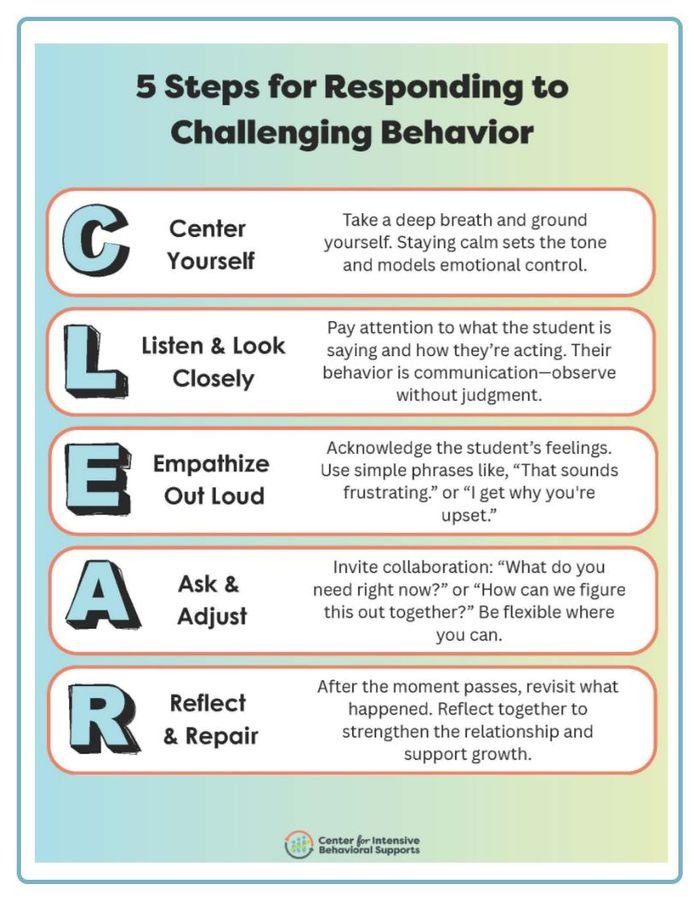
Stay grounded, listen with empathy, and respond with flexibility. Use this 5-step approach to keep interactions calm, supportive, and focused on relationship-building.
5 Steps for Responding to Challenging Behavior PDF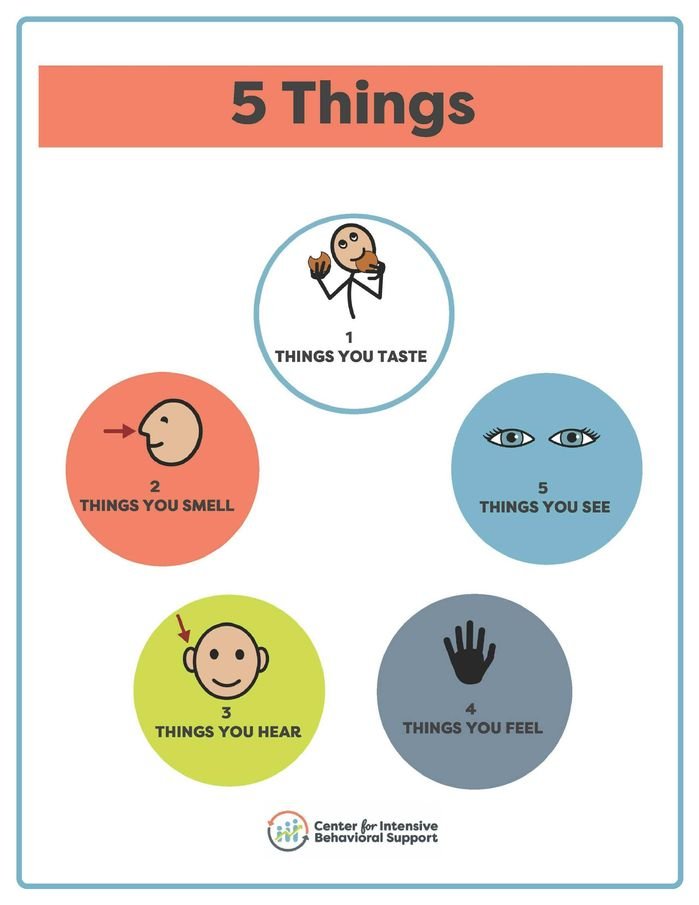
5 Things is a Mindfulness strategy that can connect students to their senses, centering the body and mind.
5 Things PDF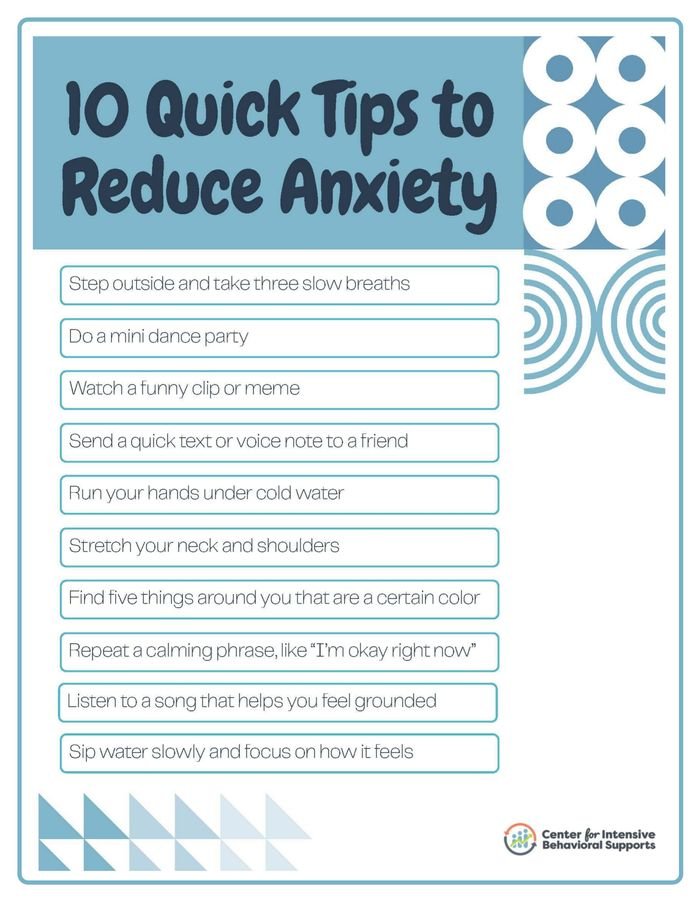
This handout offers quick, student-friendly strategies to manage anxiety in the moment. Each reset helps students calm their body, focus their mind, and regain a sense of control.
10 Quick Tips to Reduce Anxiety PDF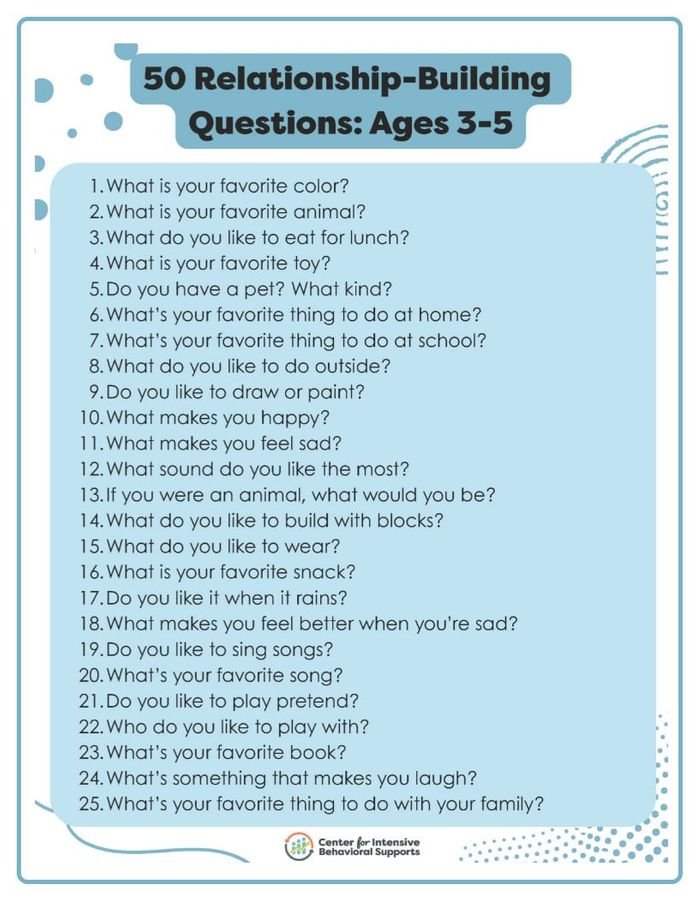
These simple, playful questions help young children explore their feelings, preferences, and imagination while building trust with caring adults. Designed with early learners in mind, these prompts promote communication and connection through fun, age-appropriate conversation.
50 Relationship-Building Questions: Ages 3-5 PDF
These questions spark curiosity, encourage empathy, and help children in grades K-5 reflect on themselves, their feelings, and their friendships. They're ideal for building meaningful connections in the classroom and creating a supportive environment.
50 Relationship-Building Questions: Ages 6-11 PDF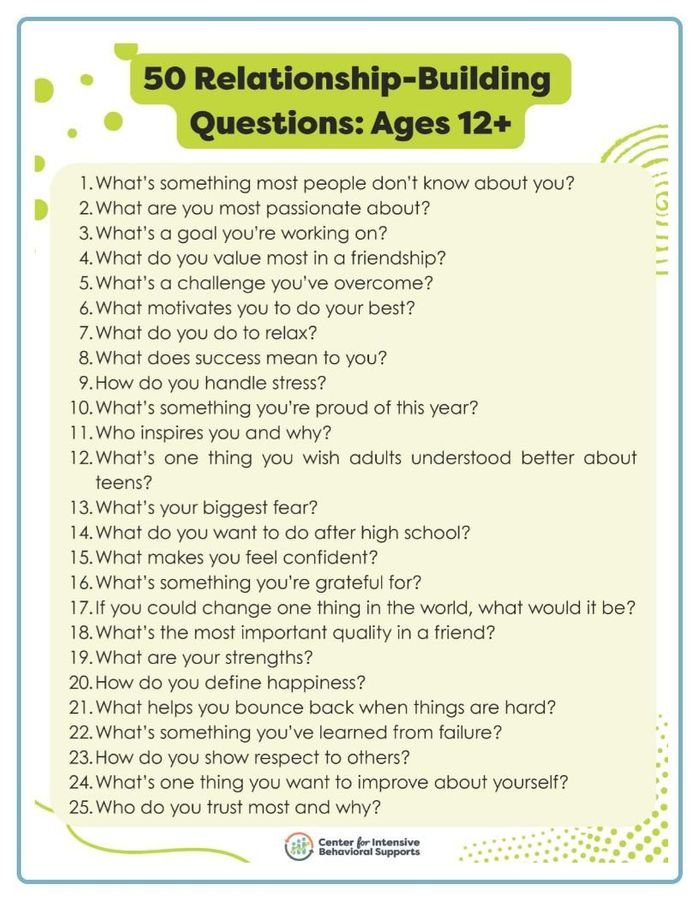
These reflective and thought-provoking questions help teens explore identity, relationships, goals, and challenges, fostering emotional insight and authentic classroom dialogue. They're perfect for building trust, respect, and connection with older students.
50 Relationship-Building Questions: Ages 12+ PDF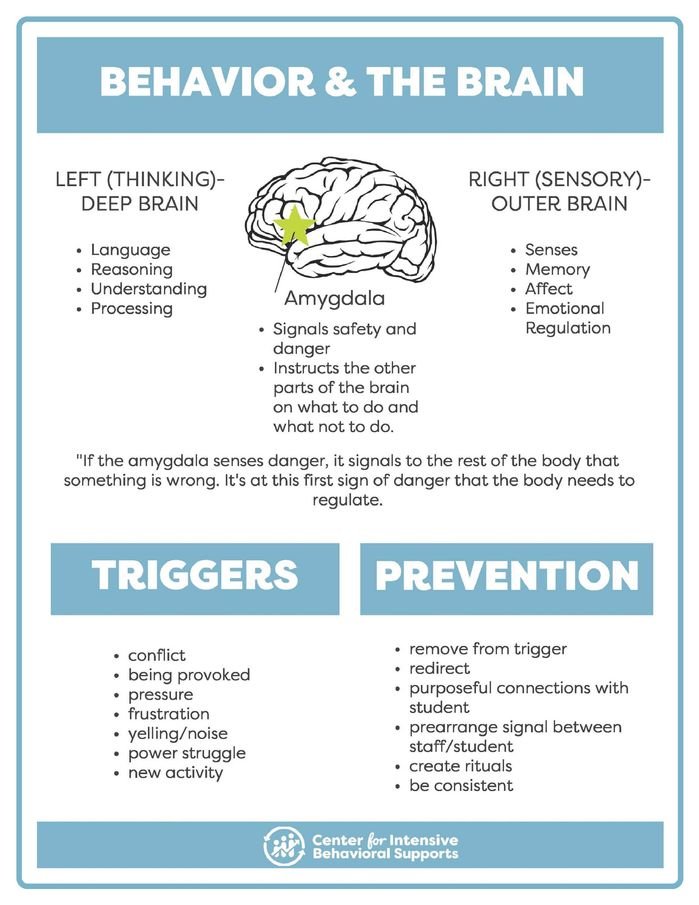
Behavior & the Brain highlights parts of the brain and their respective function.
Behavior & the Brain PDF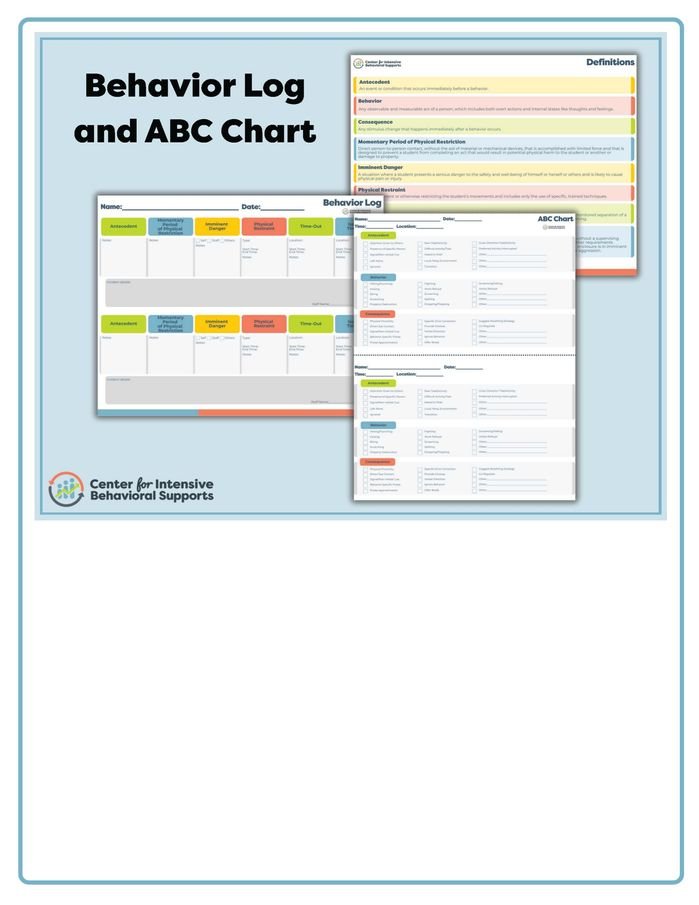
This resource supports educators in developing a shared understanding of key terms. It includes a definitions page, example pages, and blank template pages that teams can use to document real-time data during actual behavioral incidents.
Behavior Log and ABC Chart PDF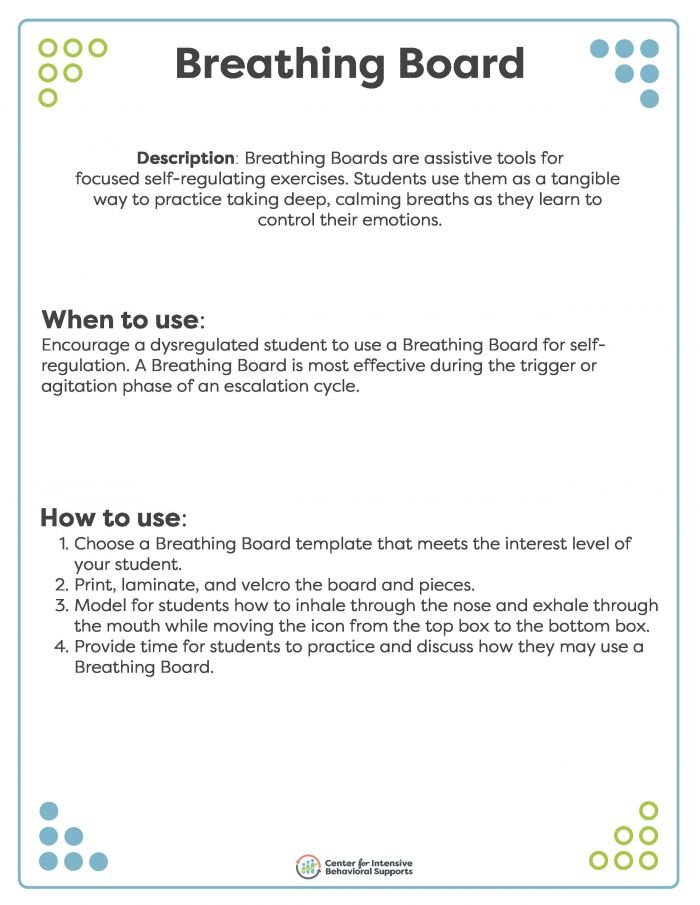
For use with the breathing board resources
Breathing Board Implementation PDF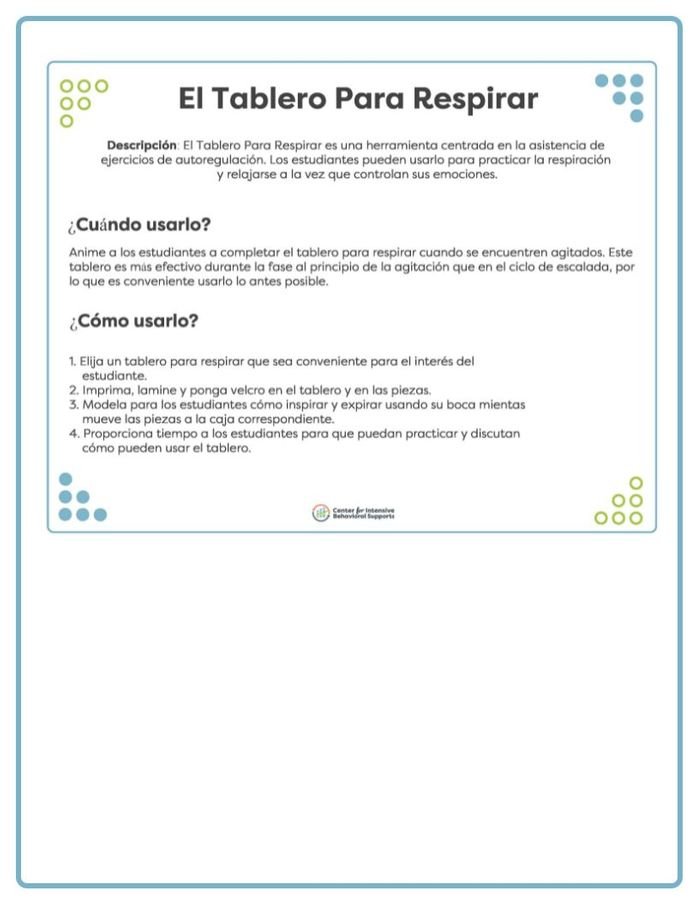
Para usar con los recursos del tablero de respiración
Implementación del Tablero de Respiración PDF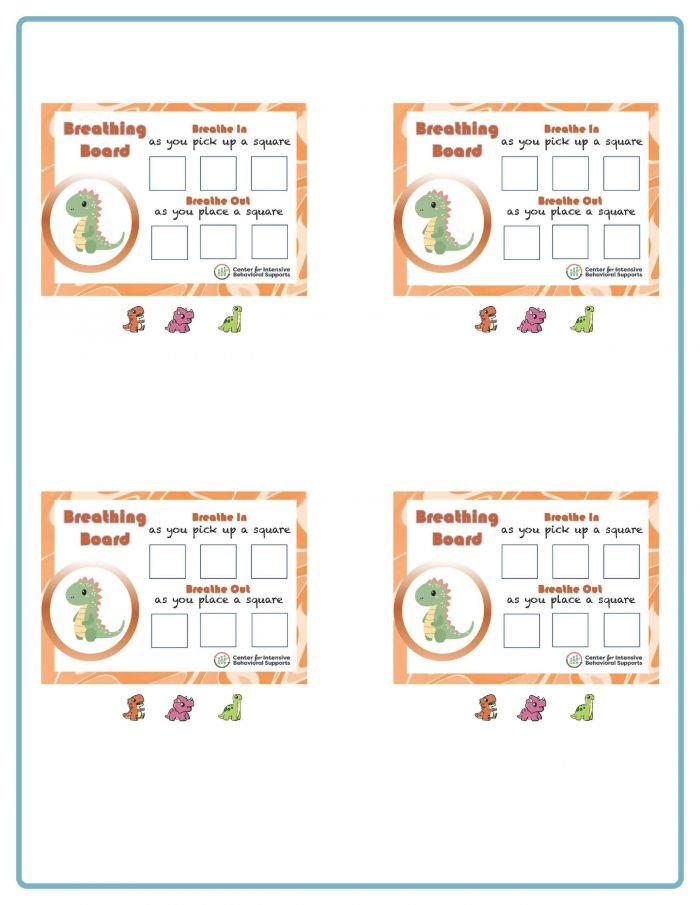
The Breathing Board handout provides an activity for youth to de-escalate. Print each board or all of the boards to support the student.
Breathing Board - 3 breaths - mini icons PPT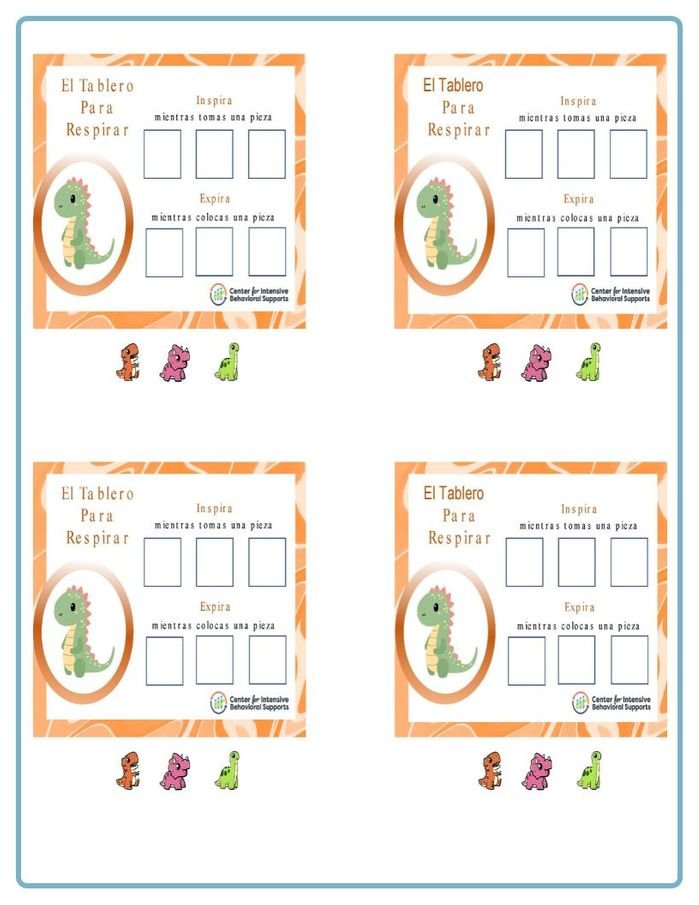
El Tablero Para Respirar es una herramienta centrada en la asistencia de ejercicios de autoregulación. Los estudiantes pueden usarlo para practicar la respiración y relajarse a la vez que controlan sus emociones.
El Tablero Para Respirar PPT
This resource helps students learn how to build inclusive, respectful friendships with peers who have significant disabilities. It emphasizes empathy, communication, and meaningful connection through practical tips and examples.
Building Inclusion & Friendship PDF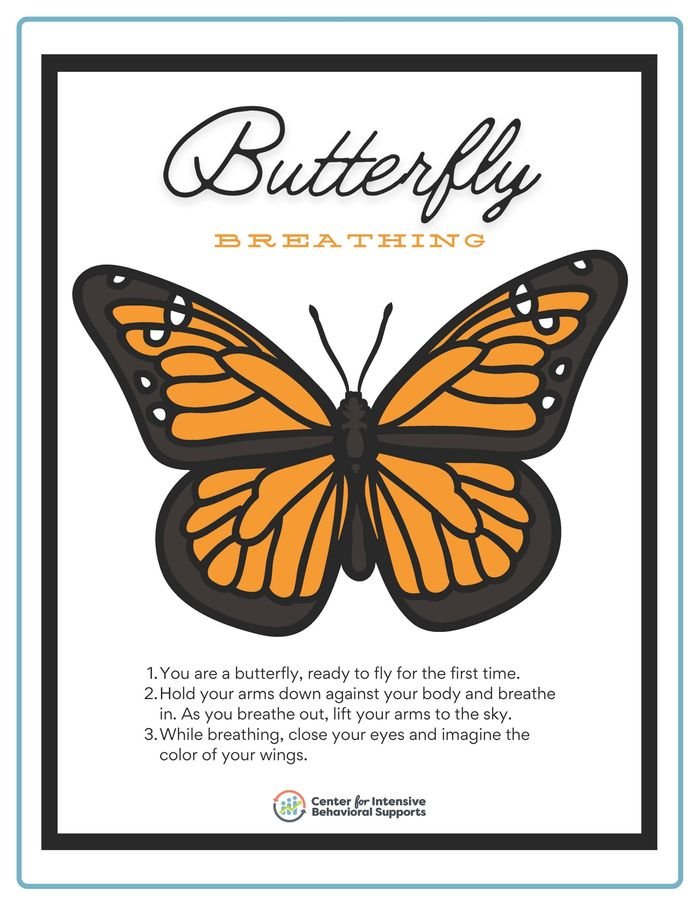
Butterfly Breathing encourages students to feel relaxed and free. Use this strategy to encourage students to self-regulate when they feel stressed, anxious, or upset.
Butterfly Breathing PDF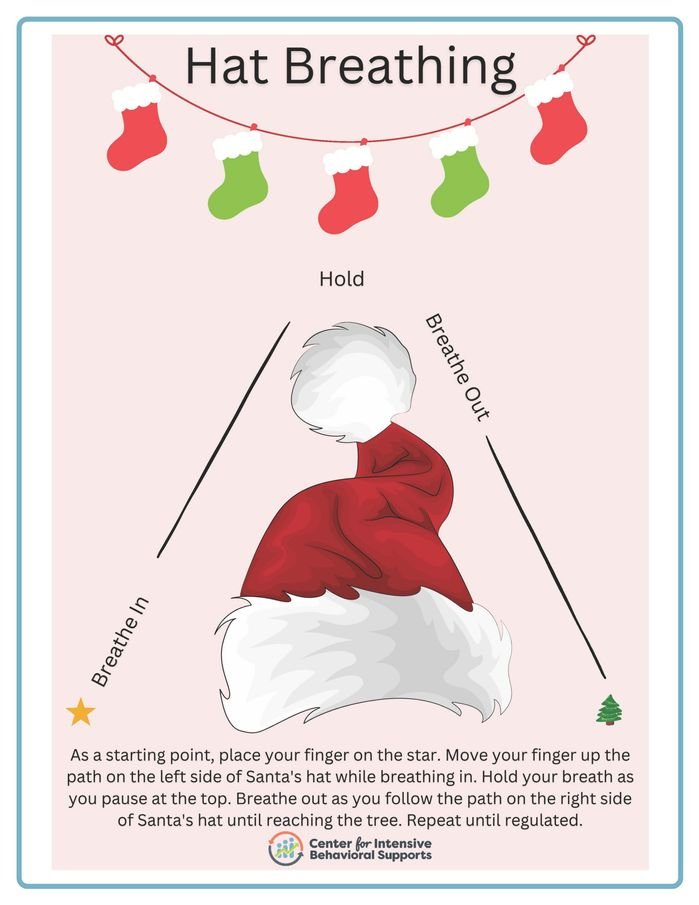
Use these strategies to encourage students to self-regulate when they feel stressed, anxious, or upset. Practicing these techniques while in a regulated state will help students feel confident when they need to use any regulating strategy on their own.
Christmas Breathing PDF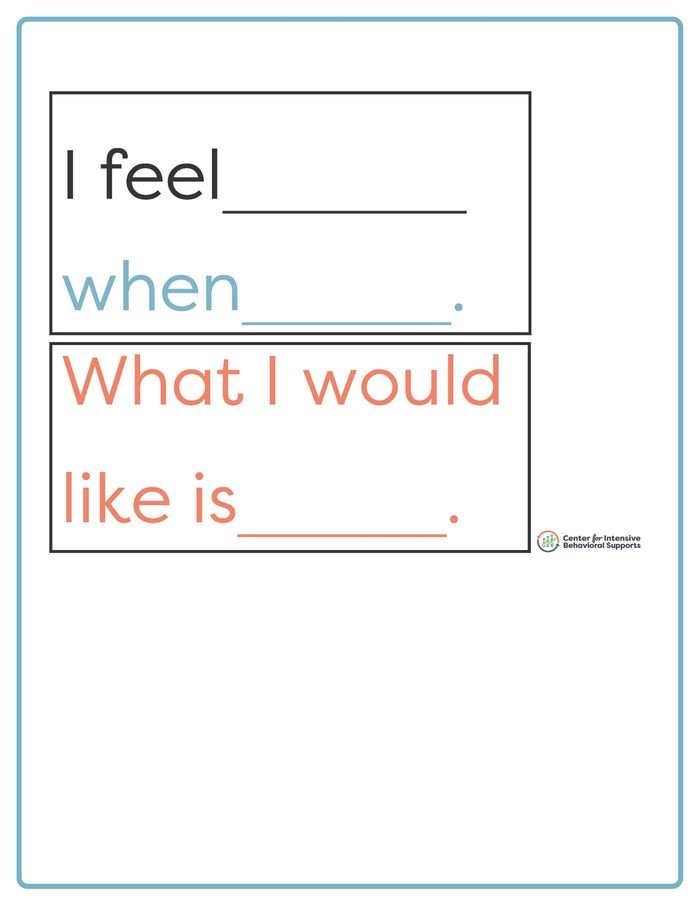
This icon-focused plan encourages students of all abilities to identify emotions and the tools to return to a regulated state. This plan provides a template for adults to engage students in discussions about different feelings and ways to regulate unwanted or uncomfortable emotions.
Circle Responses PDF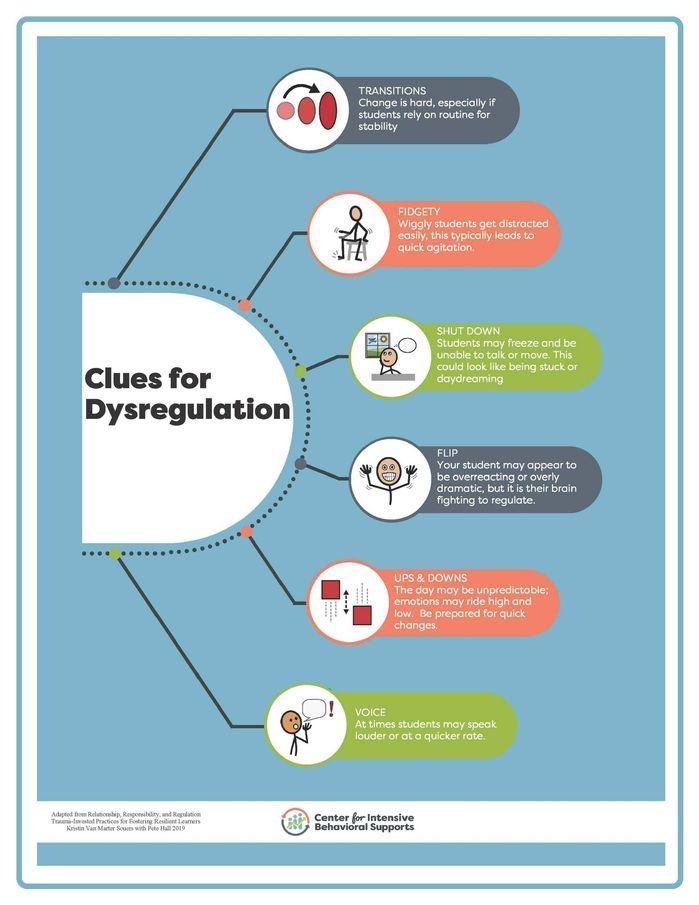
This resource provides adults with observable signs of dysregulation and strategies to regain student focus.
Clues for Dysregulation PDF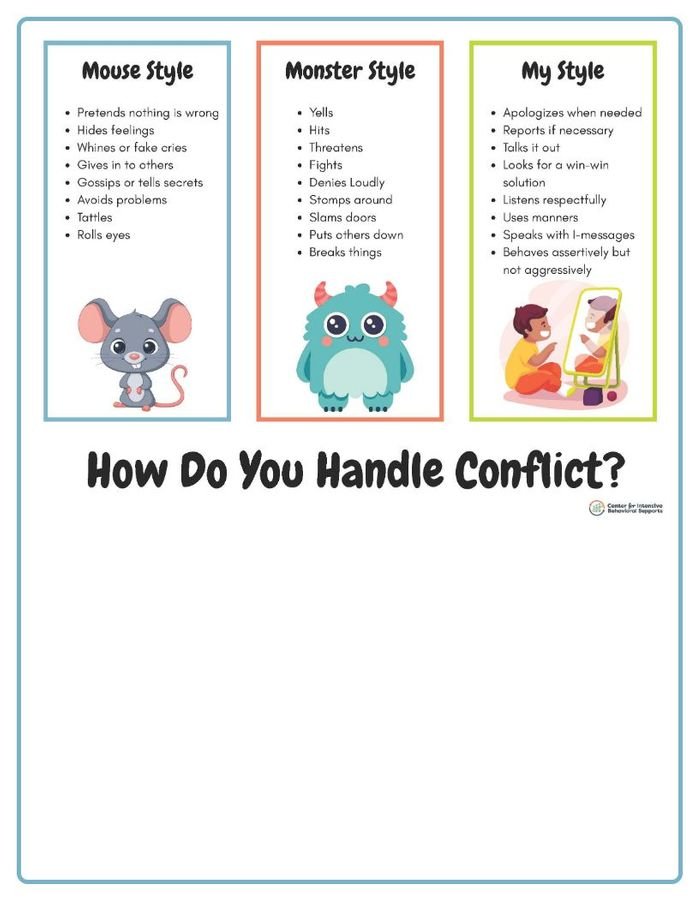
This document teaches students about three different conflict styles. It identifies healthy ways to manage conflict and includes a script for using I-Messages to help students express feelings respectfully.
Conflict Styles PDF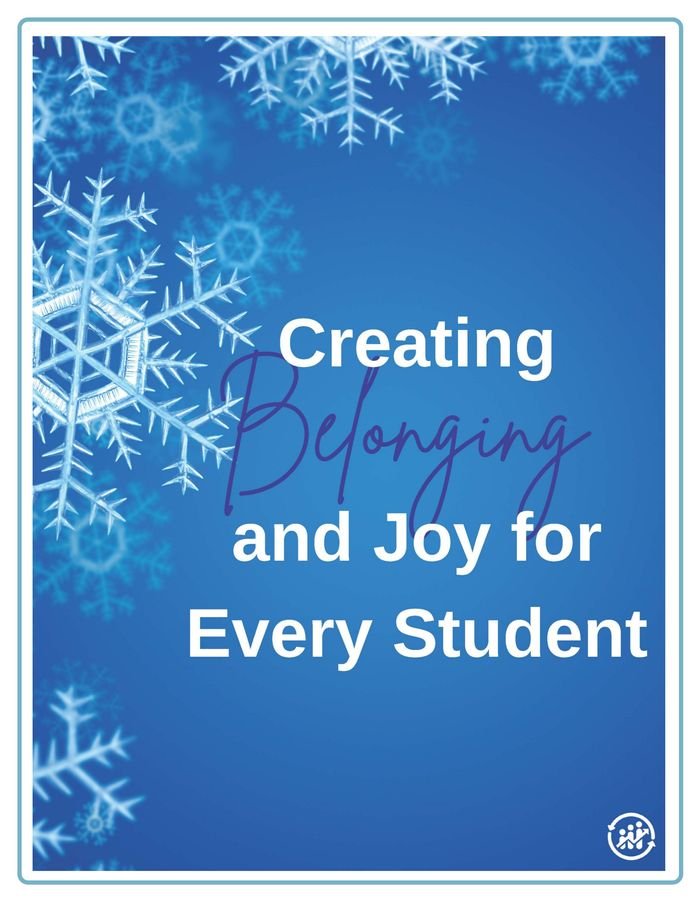
This resource offers inclusive holiday season activities that help every student feel seen, valued, and
connected. Each activity aligns with an educator tip and includes simple crafts or a worksheet and circle question to build belonging during the winter months.
Coloring can help engage the brain without a lot of effort. When a student cannot focus,
coloring is a re-connection strategy.
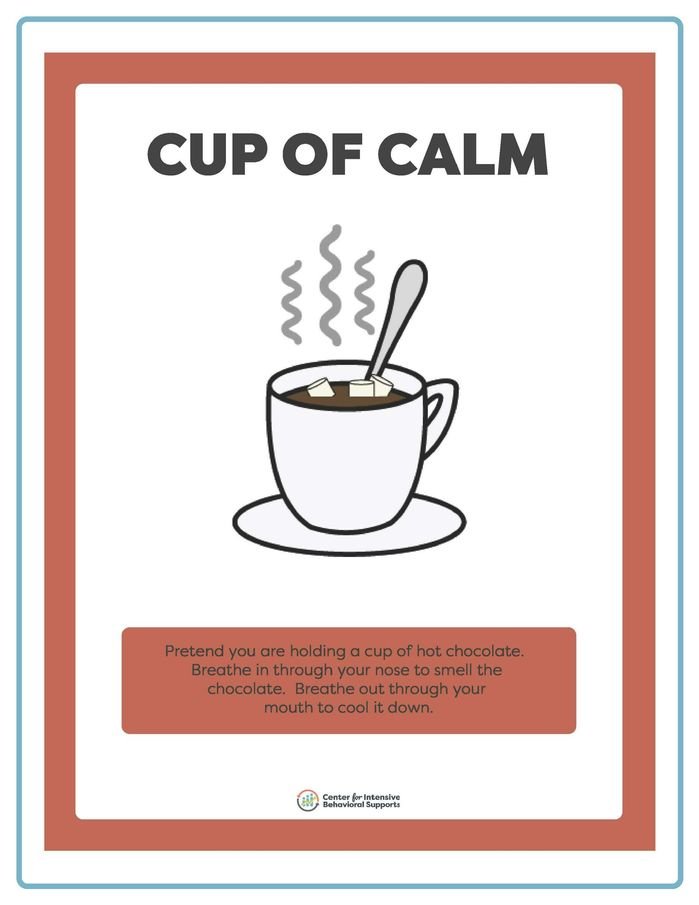
The Cup of Calm helps students engage different senses to promote self-regulation.
Cup of Calm PDF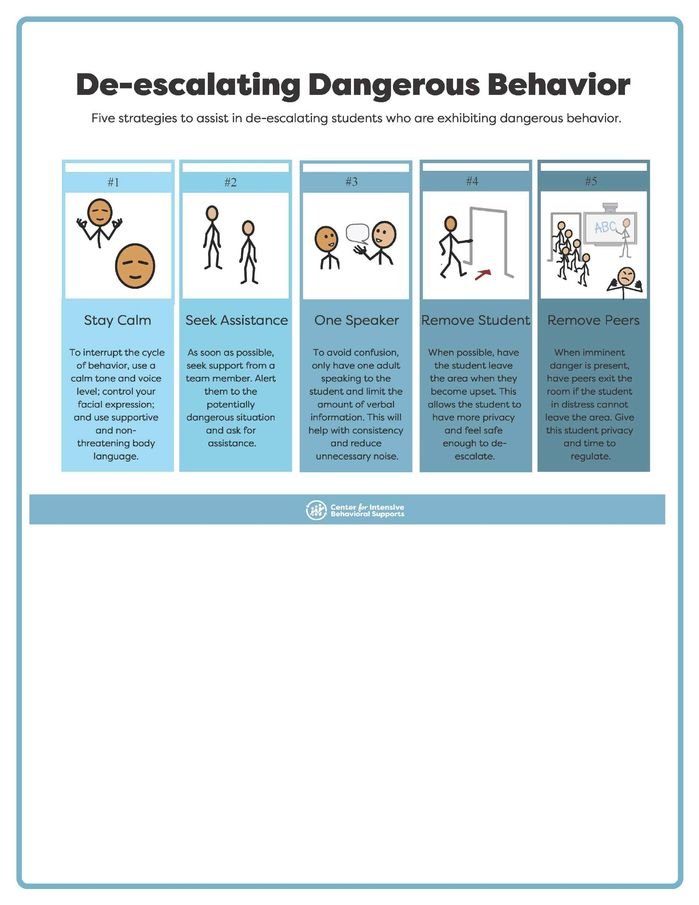
These are strategies to help when attempting to de-escalate dangerous behaviors.
De-escalating Dangerous Behavior PDF
This poster visually guides students through a simple, five-step decision-making process: Stop & Think, List Options, Weigh Consequences, Choose Wisely, and Reflect. It provides a quick-reference framework that reinforces thoughtful choices throughout the school day.
Smart Decision-Making Poster PDF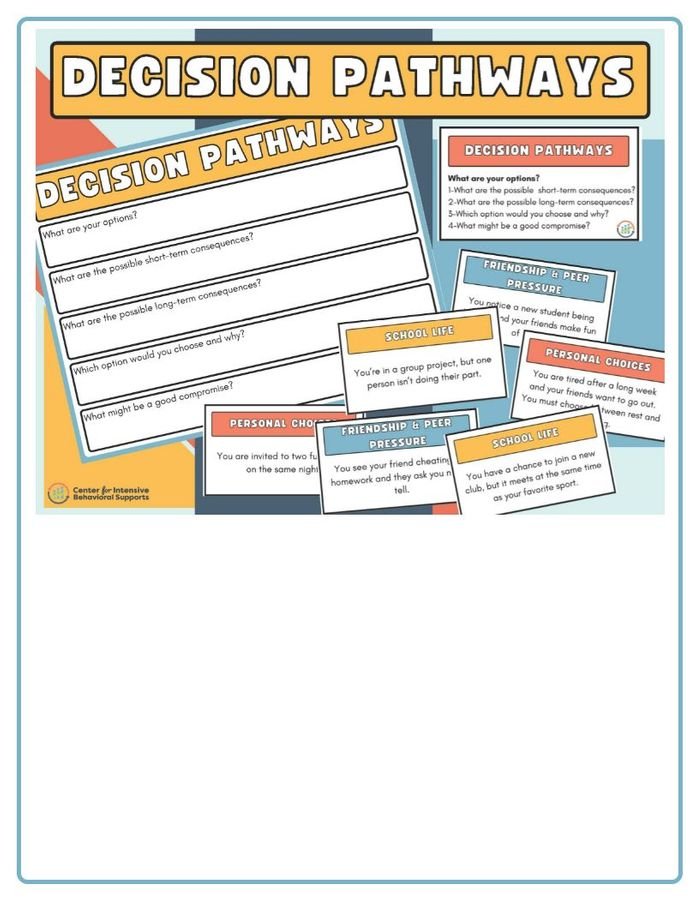
Decision Pathways is a classroom-ready tool that helps middle and high school students practice thoughtful, intentional decision-making. Each card presents a realistic scenario and prompts students to consider options, consequences, and personal choices.
Decision Pathways PDF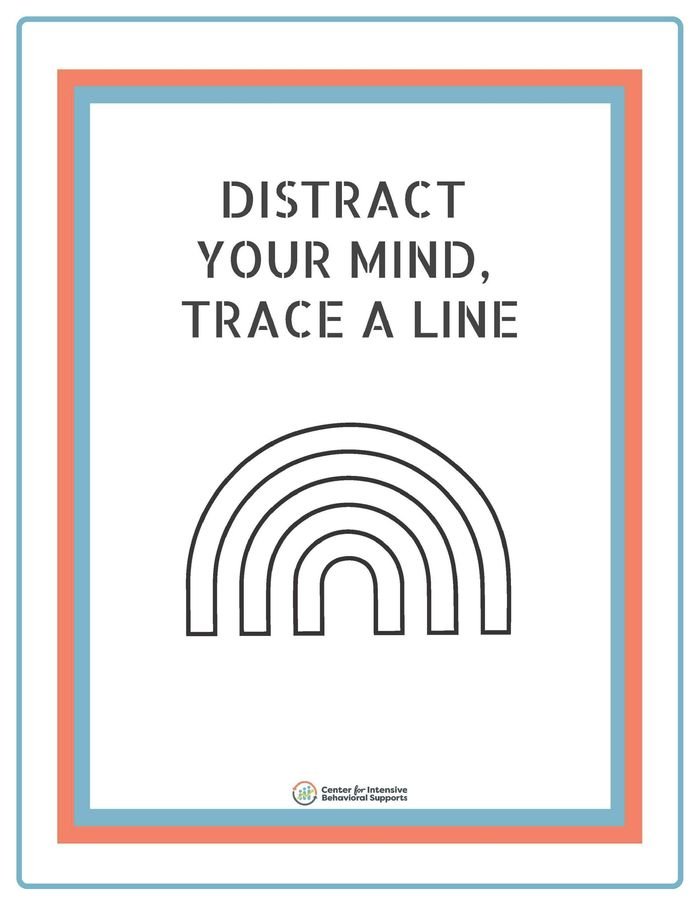
Distract Your Mind Trace A Line is a strategy to actively refocus student attention from current stressors toward a busy activity requiring active motor skill coordination.
Distract Your Mind PDF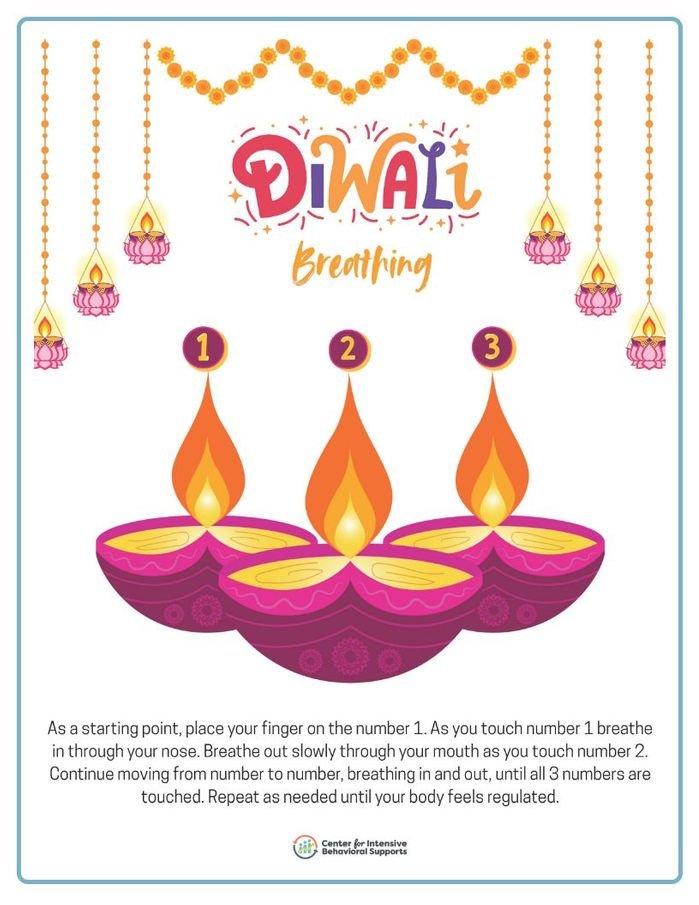
Diwali Breathing is a calming activity where children touch numbered dots on top of the Diyas, repeatedly breathing in on one dot and out on the next to relax and refocus.
Diwali Breathing PDF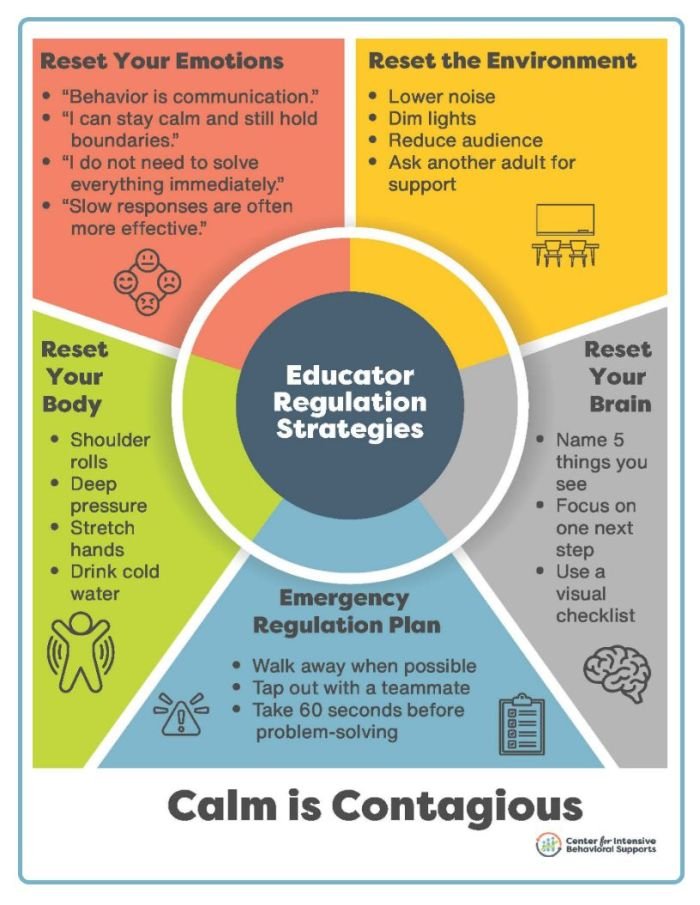
The Educator Regulation Strategies is a quick reference resource designed to support staff in recognizing how to reset during difficult moments and responding intentionally throughout the school day. This poster provides simple reminders and practical regulation strategies that educators can use to support their own well-being.
Educator Regulation Strategies PDF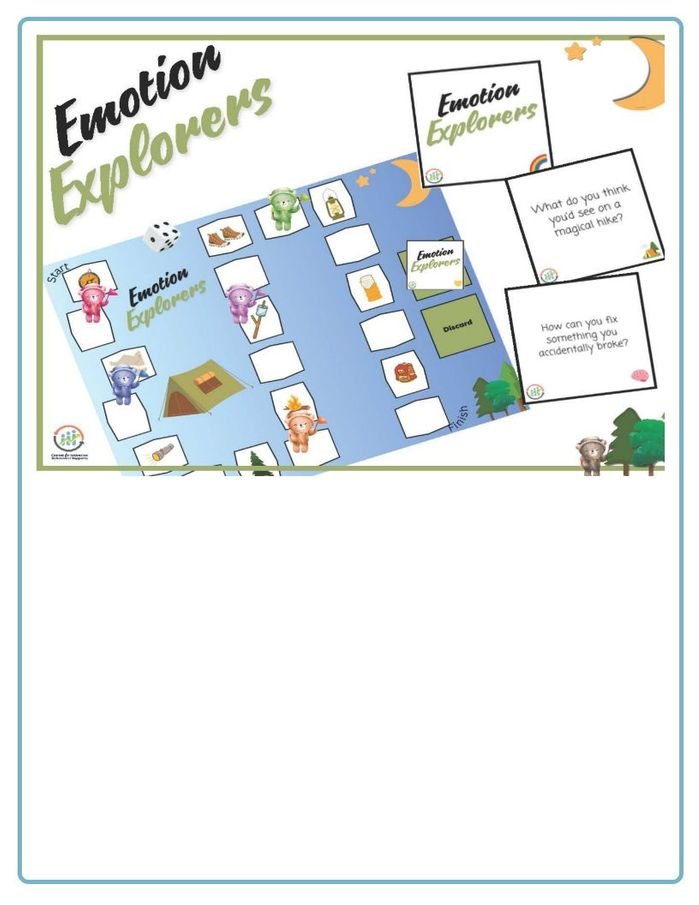
Emotion Explorers is a playful, camping-themed game that helps young children build social-emotional skills through storytelling, role play, and meaningful questions. As they hike through feelings, friendship, and problem-solving adventures, kids learn to name emotions, connect with others, and handle challenges with confidence.
Emotion Explorers PDF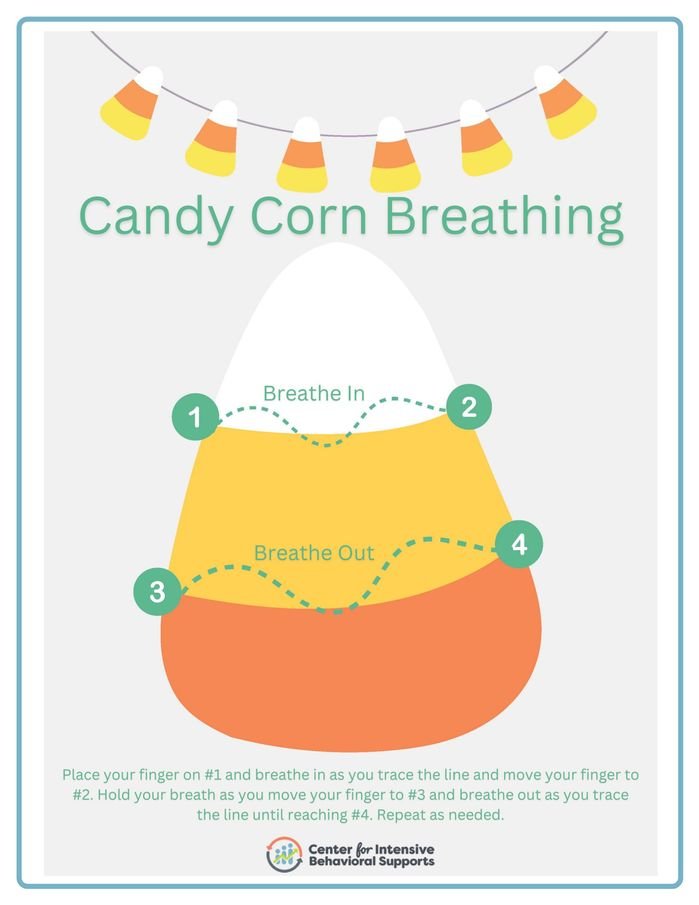
Use these strategies to encourage students to self-regulate when they feel stressed, anxious, or upset. Practicing these techniques while in a regulated state will help students feel confident when they need to use any regulating strategy on their own.
Fall Breathing Strategies PDF
Feather breathing is a relaxation technique that encourages deep, slow breathing to promote relaxation and reduce stress.
Feather Breathing PDF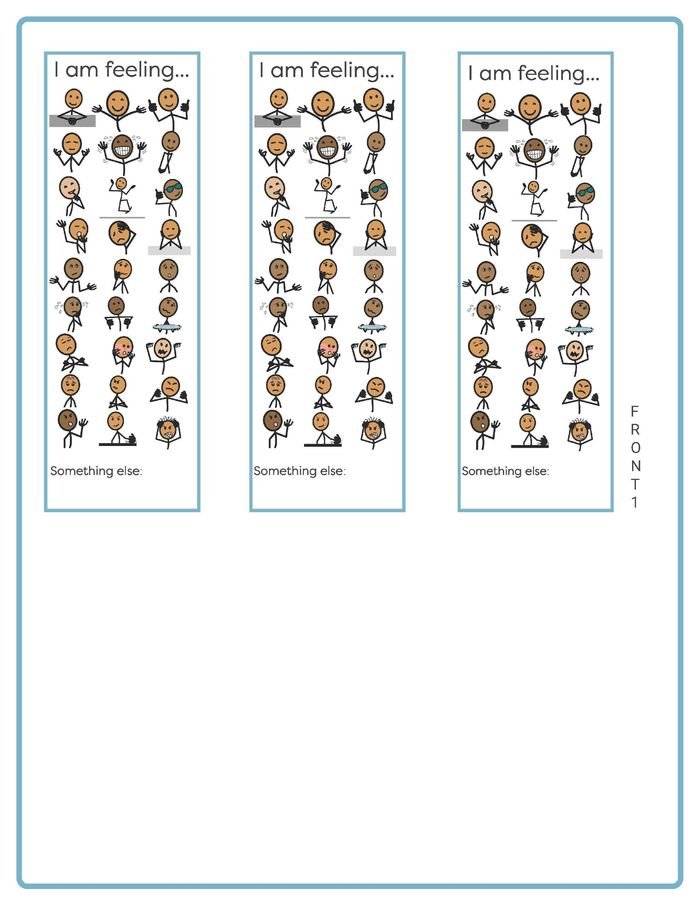
Learning how to connect emotional events to what’s going on in the body gives students a personal resource to turn to when they are not sure what they're feeling. Feelings Bookmarks provide students with visual prompts to clearly identify the emotions they experience and example strategies for regulation.
Feelings Bookmark PDF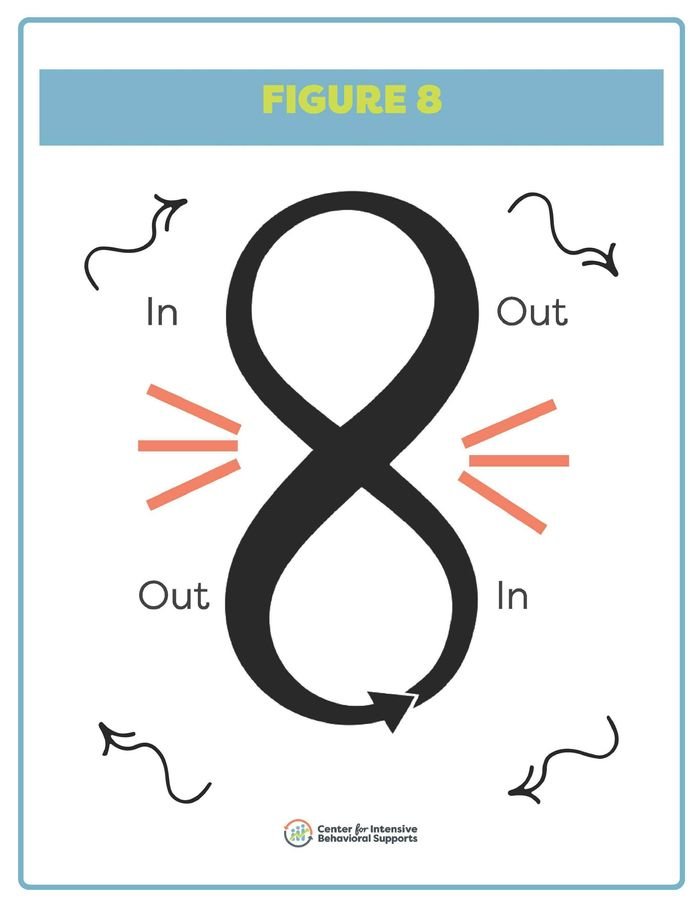
Figure 8 is a breathing strategy that can help students relax when they feel anxious or dysregulated.
Figure 8 PDF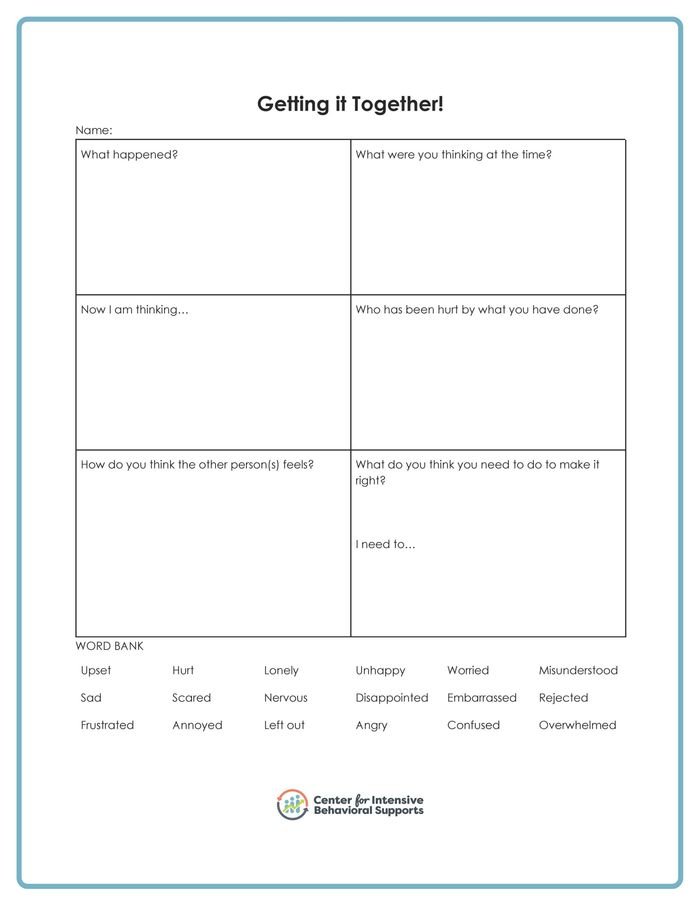
'Getting it Together!' is a student-focused tool to guide thoughts following a problem with staff or a peer that may require a restorative conversation to resolve the issue and repair the school community.
Getting It Together! PDF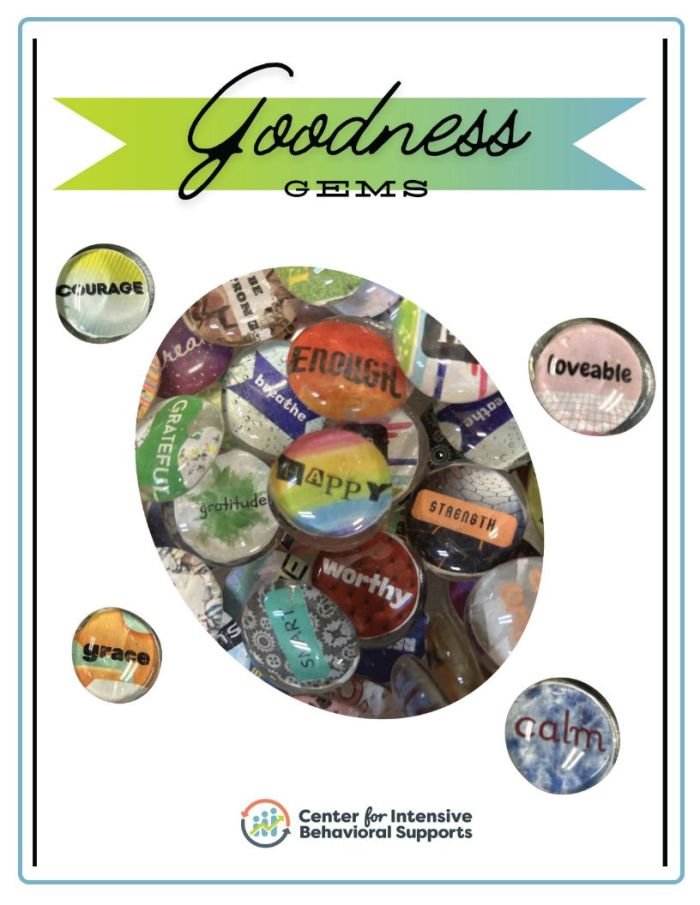
Goodness gems contain unique terms associated with positive attributes and meanings. Students may choose a gem of their liking, reflect on its message, and keep as long as it provides personal support.
Goodness Gems PDF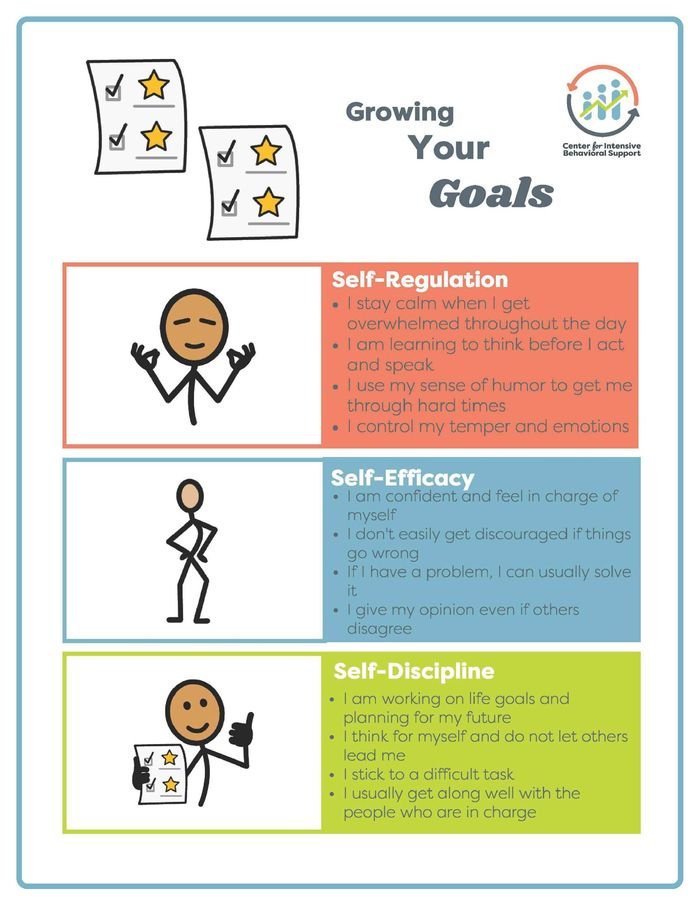
The Growing Your…provides tips on what to say or do to facilitate growth in these areas.
Growing Your Goals PDF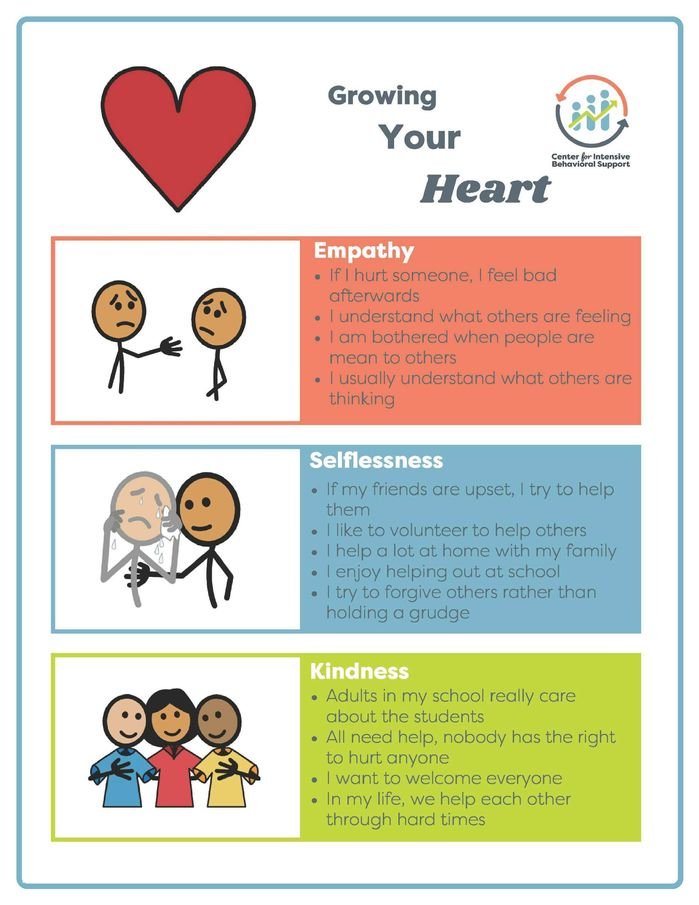
The Growing Your…provides tips on what to say or do to facilitate growth in these areas.
Growing Your Heart PDF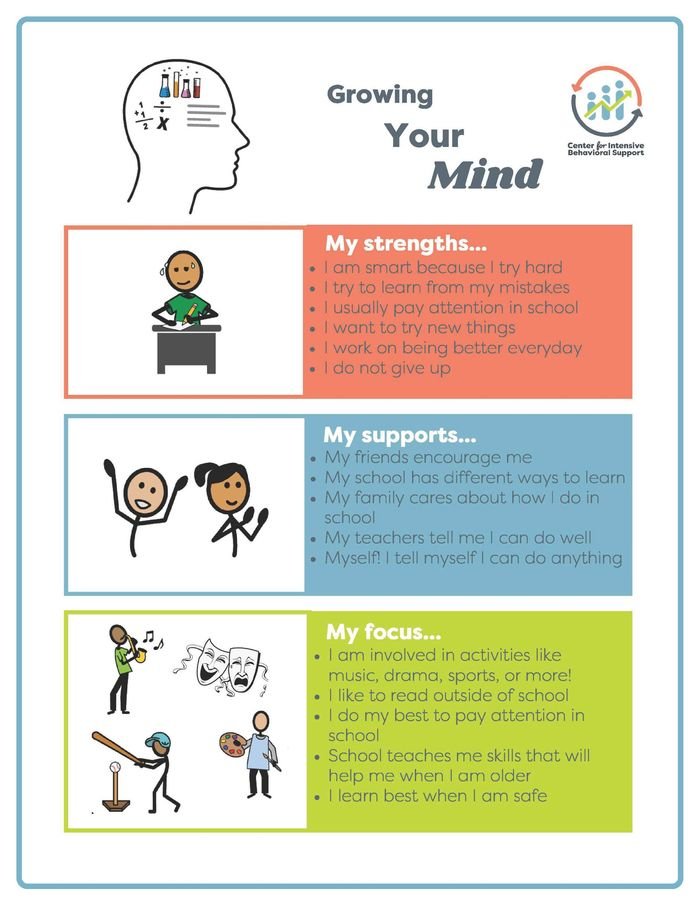
The Growing Your…provides tips on what to say or do to facilitate growth in these areas.
Growing Your Mind PDF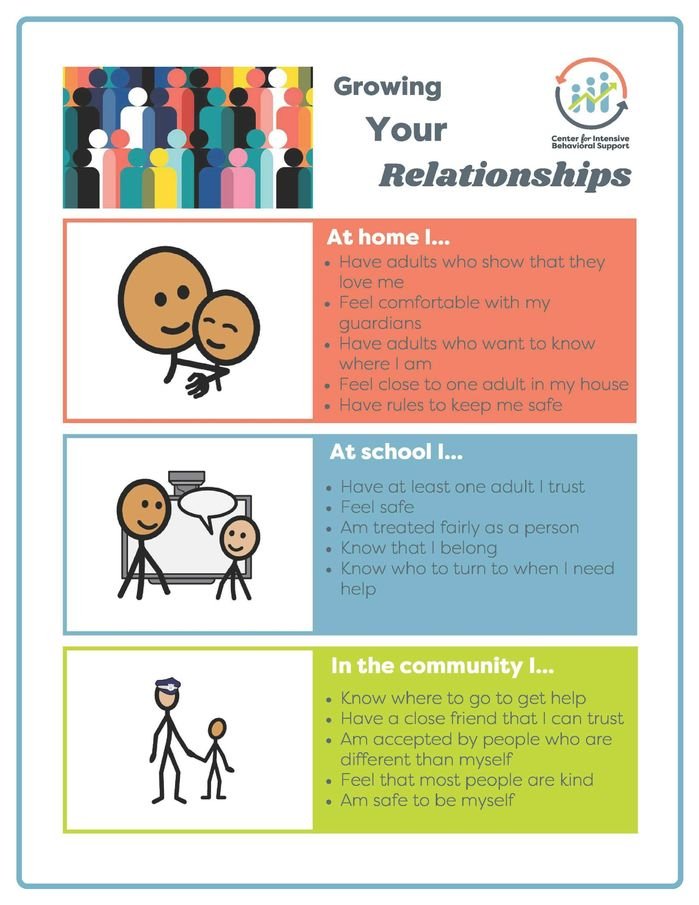
The Growing Your…provides tips on what to say or do to facilitate growth in these areas.
Growing Your Relationships PDF
Use these strategies to encourage students to self-regulate when they feel stressed, anxious, or upset. Practicing these techniques while in a regulated state will help students feel confident when they need to use any regulating strategy on their own.
Halloween Breathing Strategies PDF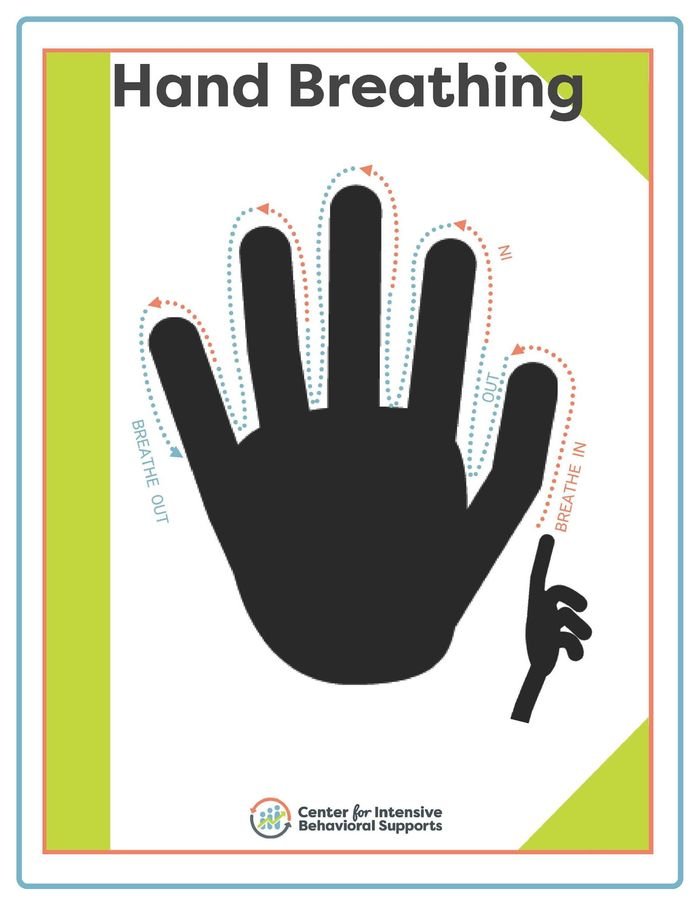
Hand Breathing allows students to visually follow how their body is engaged when using relaxing breathing strategies.
Hand Breathing PDF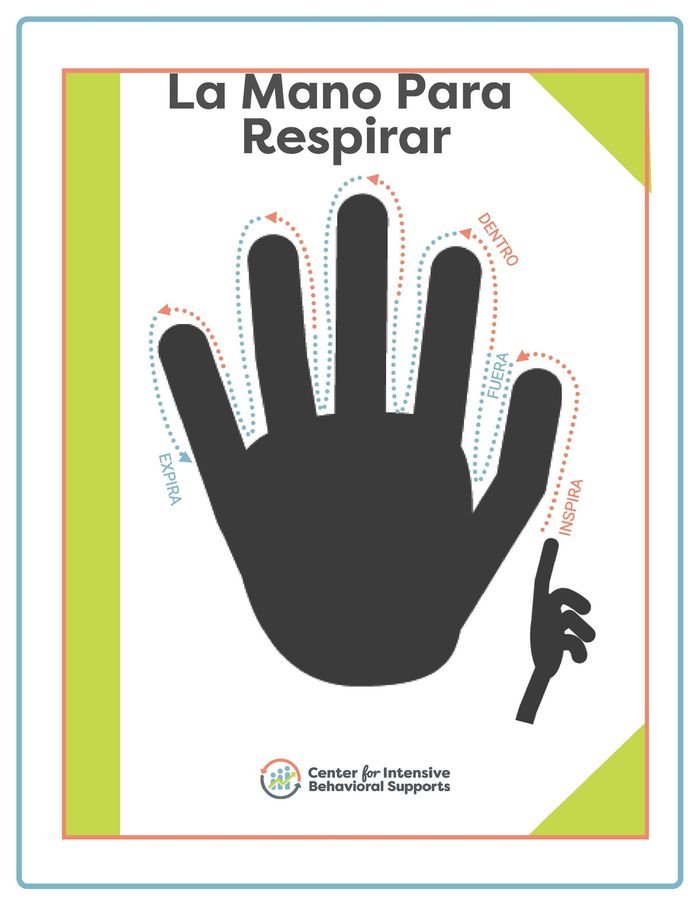
La mano para respirar permite a los estudiantes seguir visualmente cómo su cuerpo se involucra a la vez que usan técnicas de respiración relajantes.
La mano para respirar PDF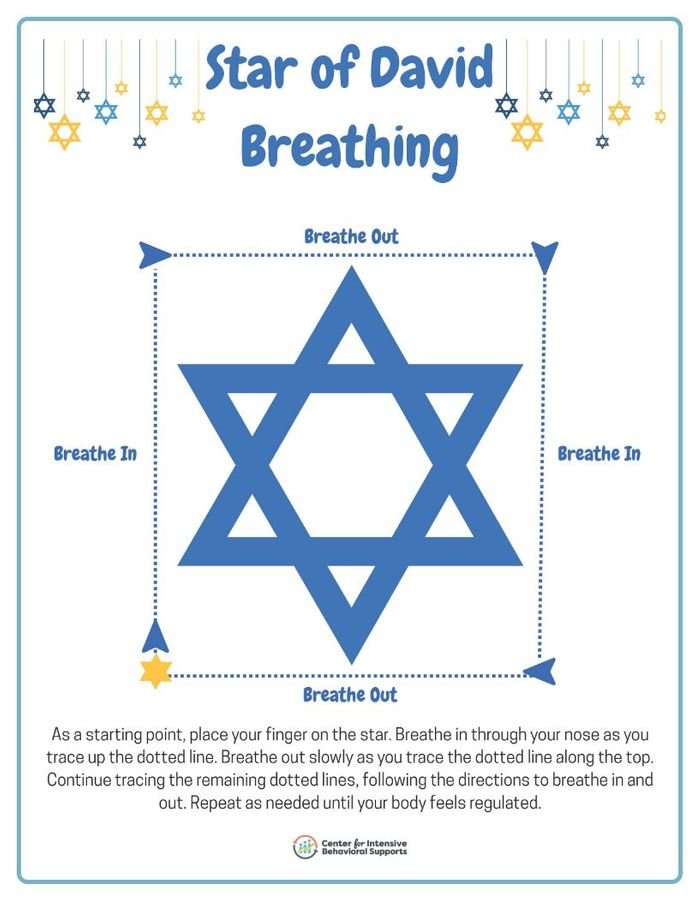
Hanukkah Breathing is a set of calming activities where children trace shapes while repeatedly breathing in and out in an effort to relax and refocus.
Hanukkah Breathing PDF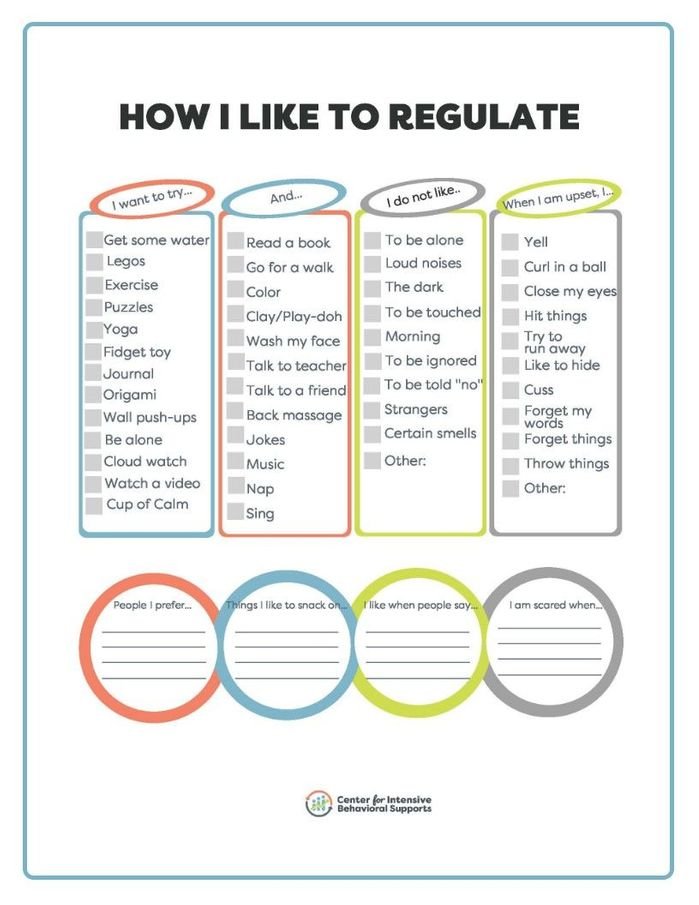
Students may not be able to identify what they need to regulate when upset. This resource provides students with ideas of ways to regulate before becoming dysregulated. Staff then keep this resource available as a future reference for intervention.
How I Like to Regulate PDF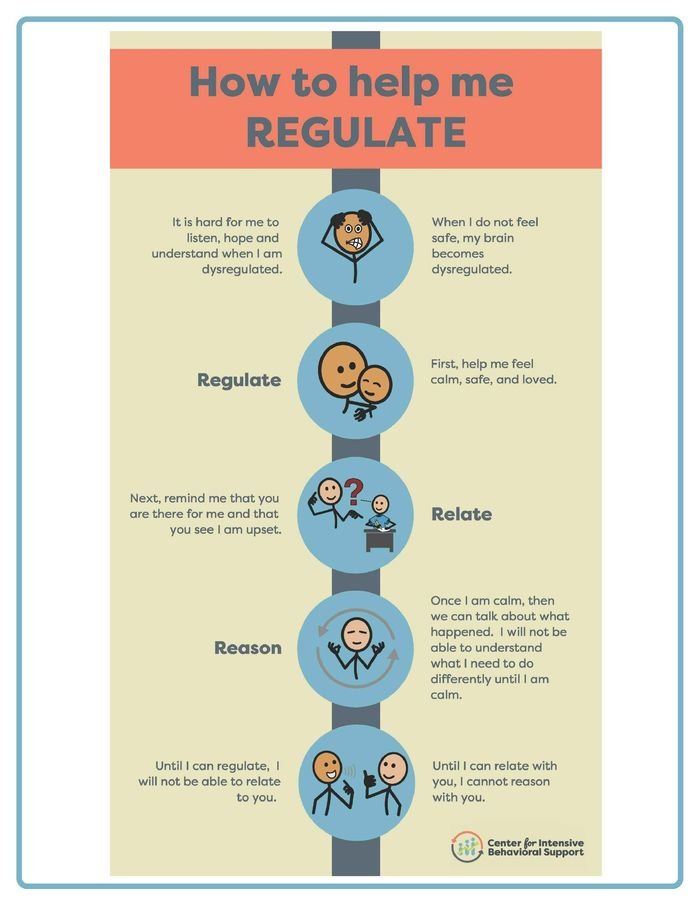
This regulation visual is a reminder that children often need help with regulation before they will ever be able to reason.
How To Help Me Regulate PDF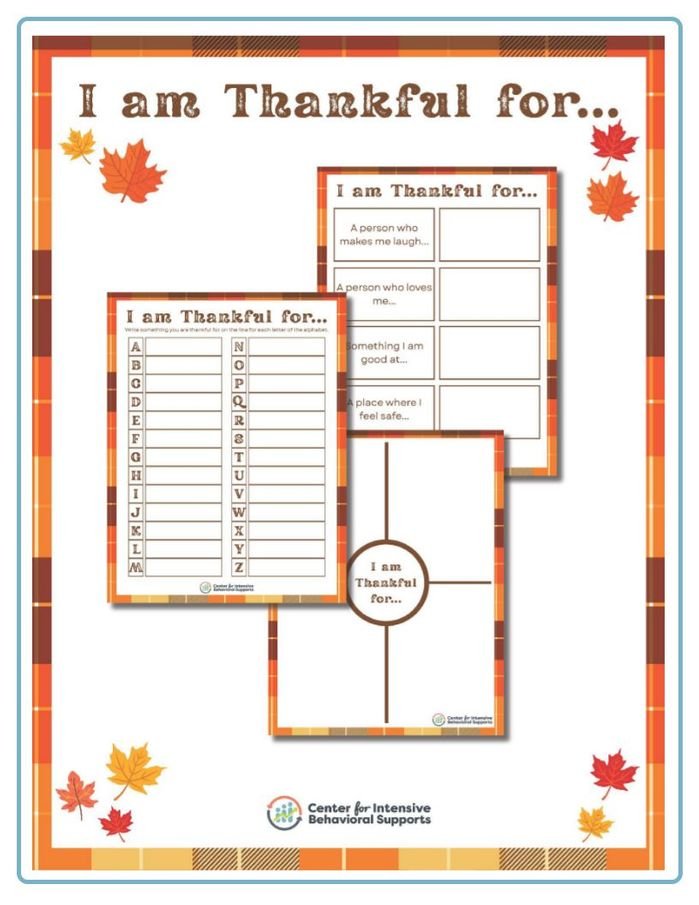
This resource helps students reflect on gratitude by providing structured ways to identify what they are thankful for. It includes simple prompts, peer-sharing opportunities, and an alphabet-based activity to encourage deeper thinking about appreciation.
I am thankful for... PDF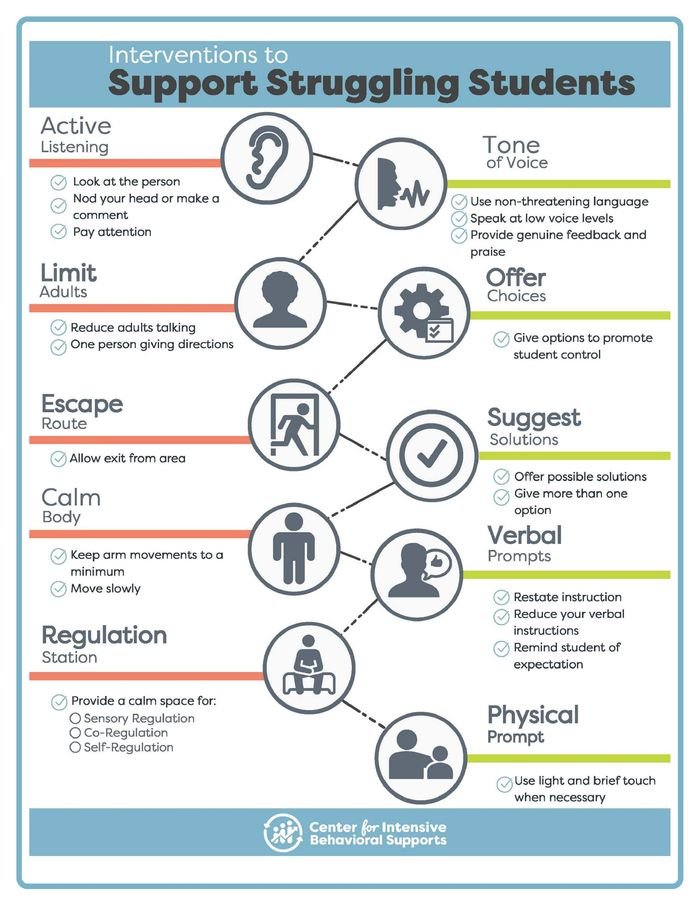
This visual will give educators a quick set of intervention tips for supporting a struggling student.
Interventions to Support Struggling Students PDF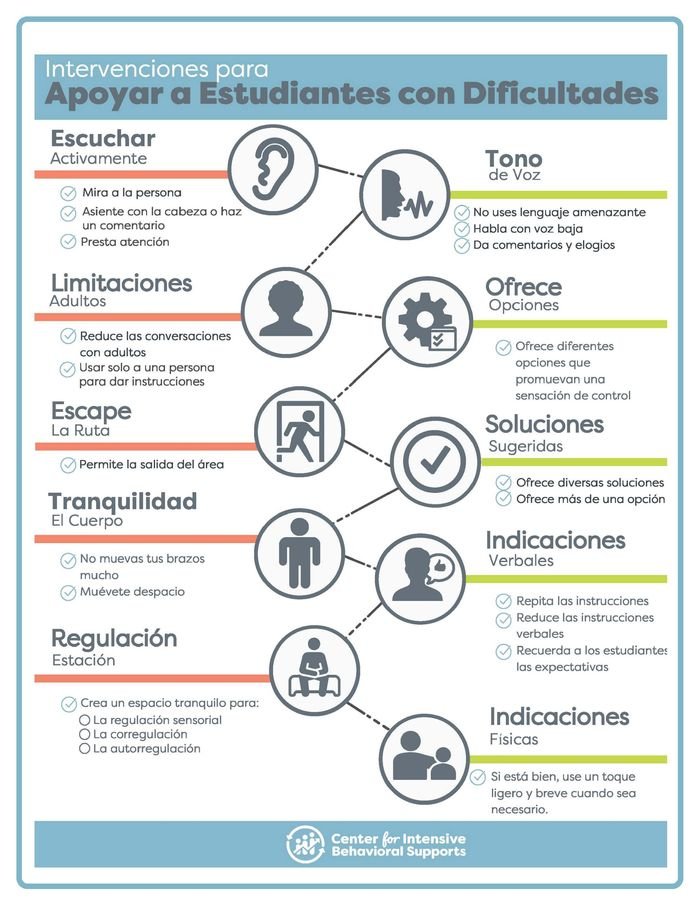
Esta ayuda visual proporciona a los educadores una serie de intervenciones y consejos para usar con aquellos estudiantes que tienen problemas.
Intervensiones para Apoyar a estudiantes con dificultades PDF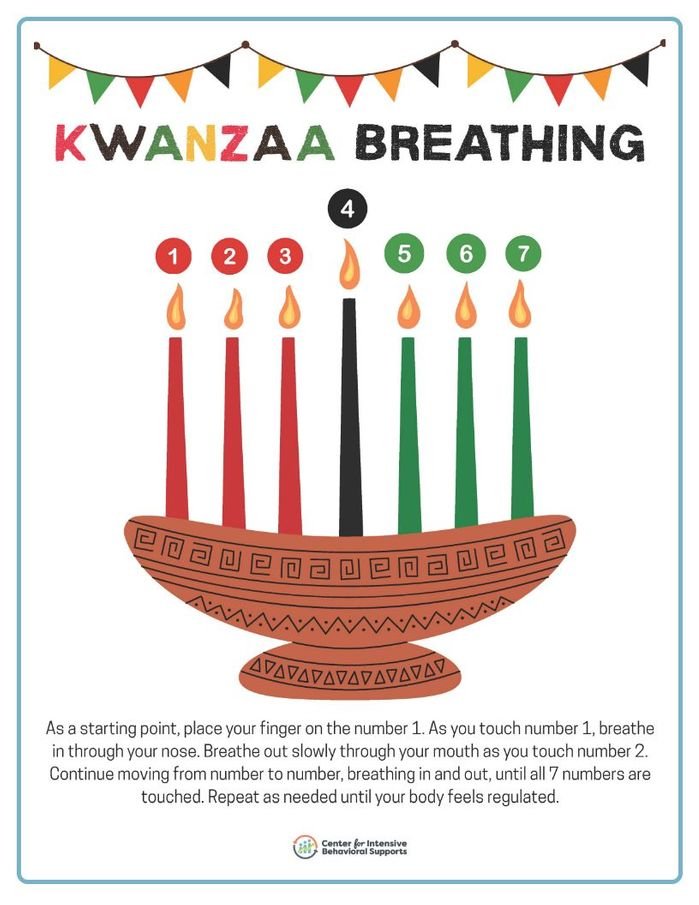
Kwanzaa Breathing is a calming activity where children touch numbered dots on top of the Mishumaa Saba, repeatedly breathing in on one dot and out on the next to relax and refocus.
Kwanzaa Breathing PDF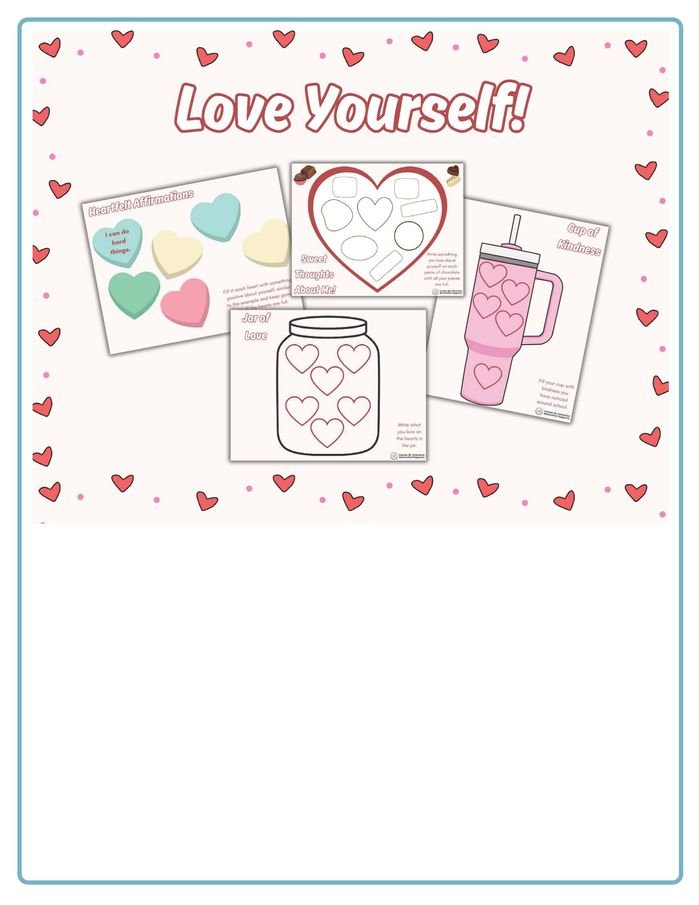
These Valentine’s activities help students practice self-love, kindness, and appreciation for others through fun, hands-on exercises.
Love Yourself PDF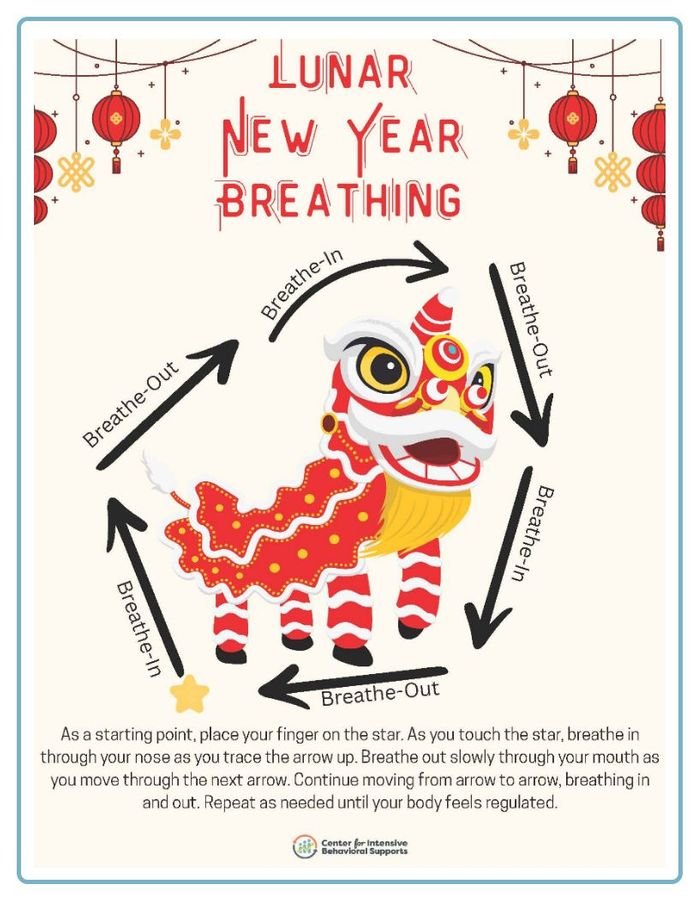
Lunar New Year Breathing is a calming activity where children trace arrows around the Lóng, repeatedly breathing in on one arrow and out on the next to relax and refocus.
Lunar New Year Breathing PDF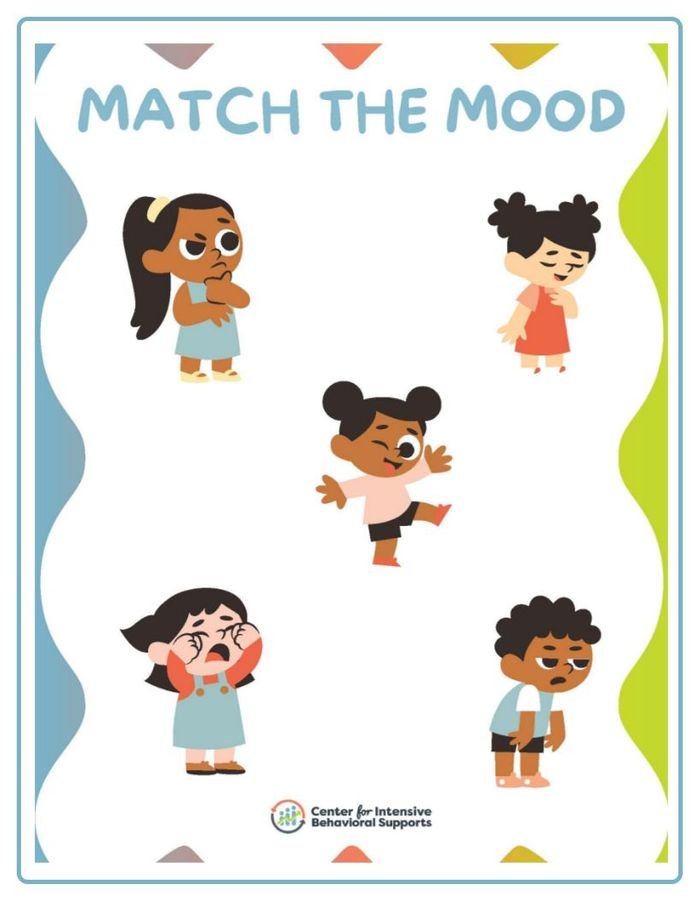
Match the Mood is an interactive emotions activity where children match cutout facial expressions to corresponding faces in a whole page format. It supports emotional recognition, language development, and self-awareness in a fun, hands-on way.
Match the Mood PDF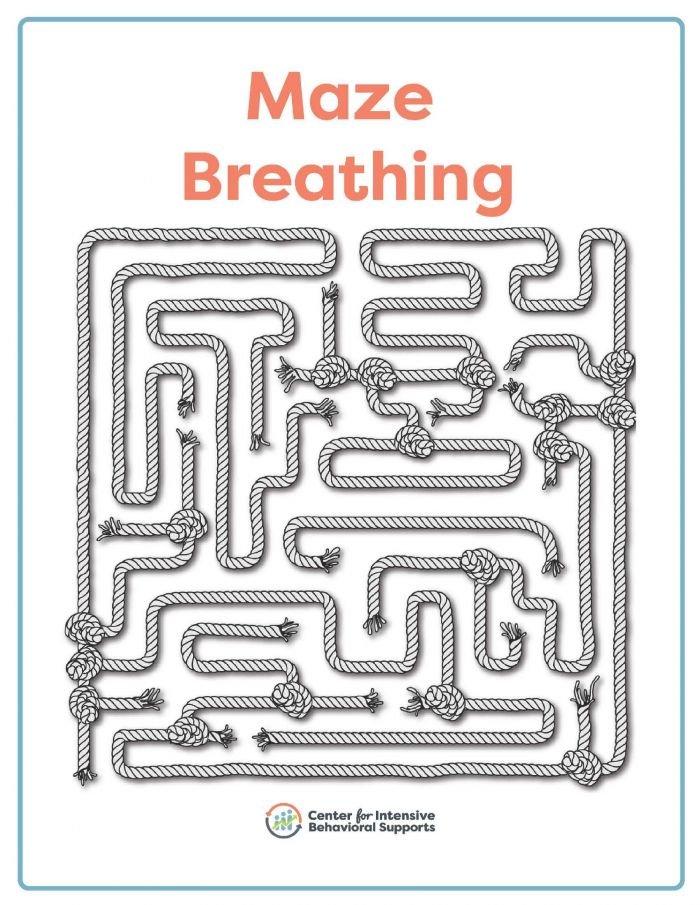
Maze breathing is a technique that helps manage stress and calm the mind.
Maze Breathing PDF
Mindfulness is being fully aware of the moment-by-moment thoughts/feelings/actions in oneself. Teaching students mindfulness, a relaxation technique, enables them to have a positive mindset.
Mindful Moments PDF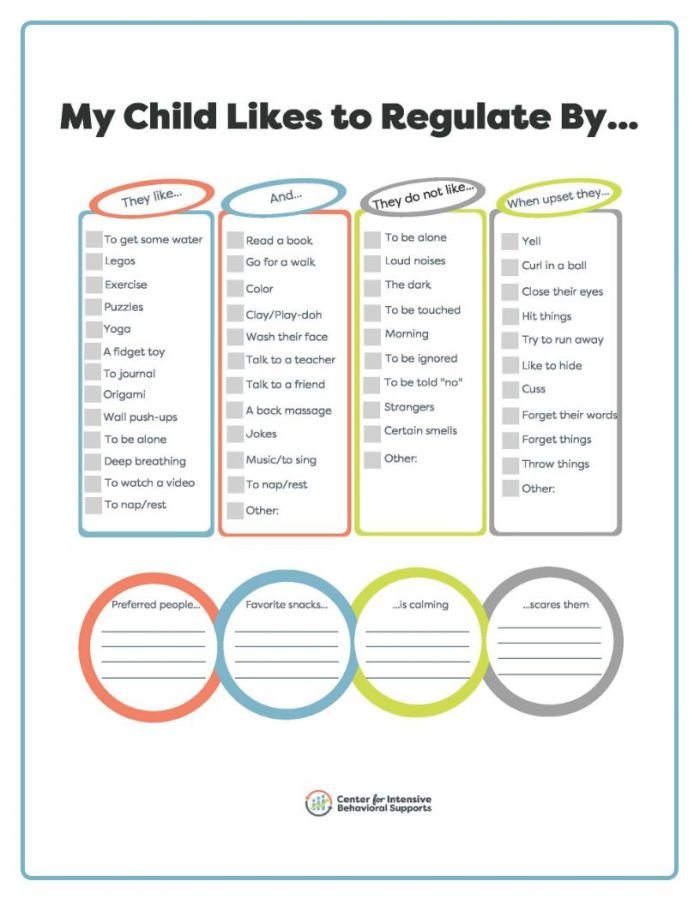
Children may be unable to identify what they need to regulate when upset. This resource asks parents/guardians to supply ideas for interventions to assist staff in supporting their child's regulation. Staff then keep this completed resource for future reference.
My Child Likes to Regulate By... PDF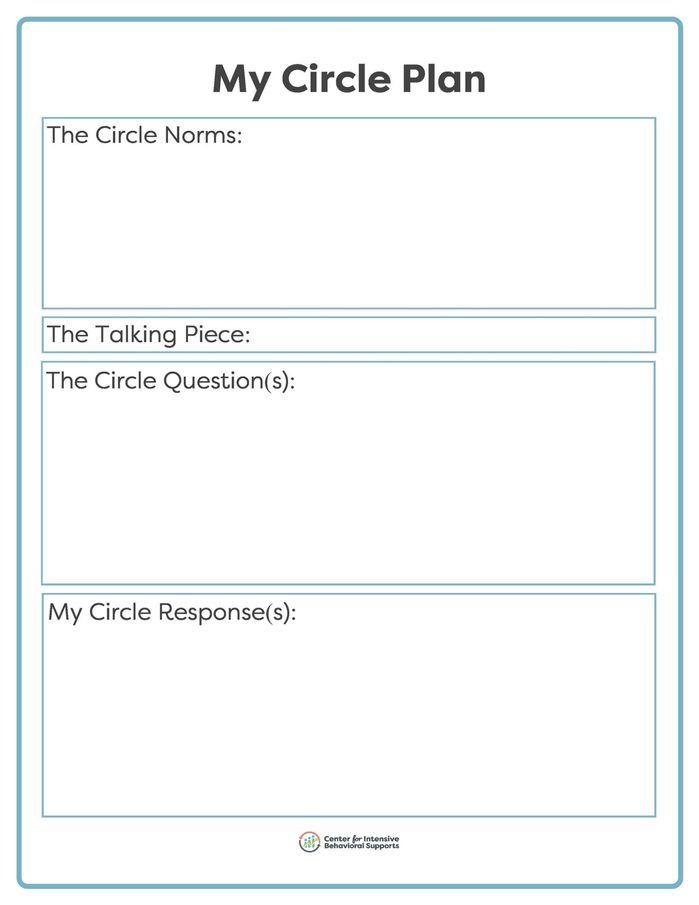
This tool allows students to review what will happen in their restorative circle before it begins. Providing advanced notice of what to expect and coaching socially appropriate responses helps reduce anxiety for some students.
My Circle Plan PDF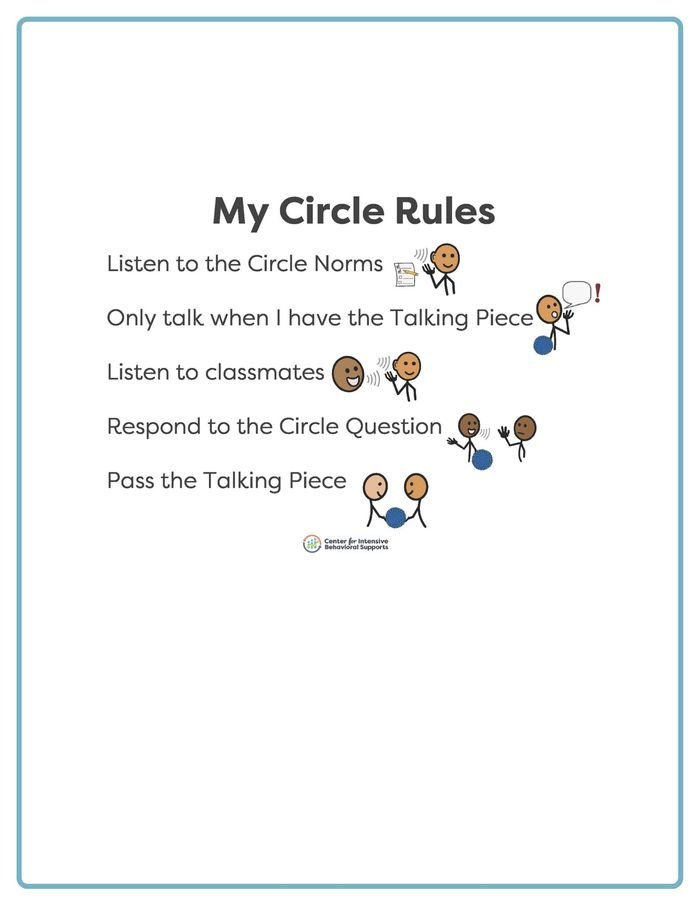
My Circle Rules offers three different versions, allowing staff to choose a tool that fits the needs of their students for learning restorative circle rules.
My Circle Rules PDF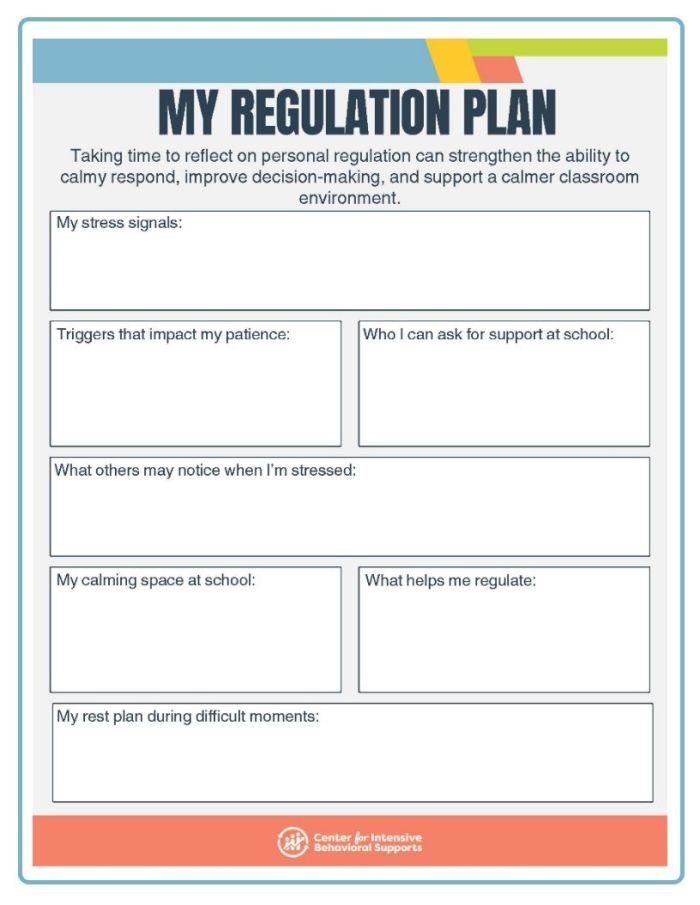
This plan is designed to help educators recognize their own stress signals, identify supportive strategies, and respond intentionally during challenging moments. Taking time to reflect on personal regulation can strengthen the ability to calmly respond, improve decision making, and support a calmer classroom environment.
My Regulation Plan PDF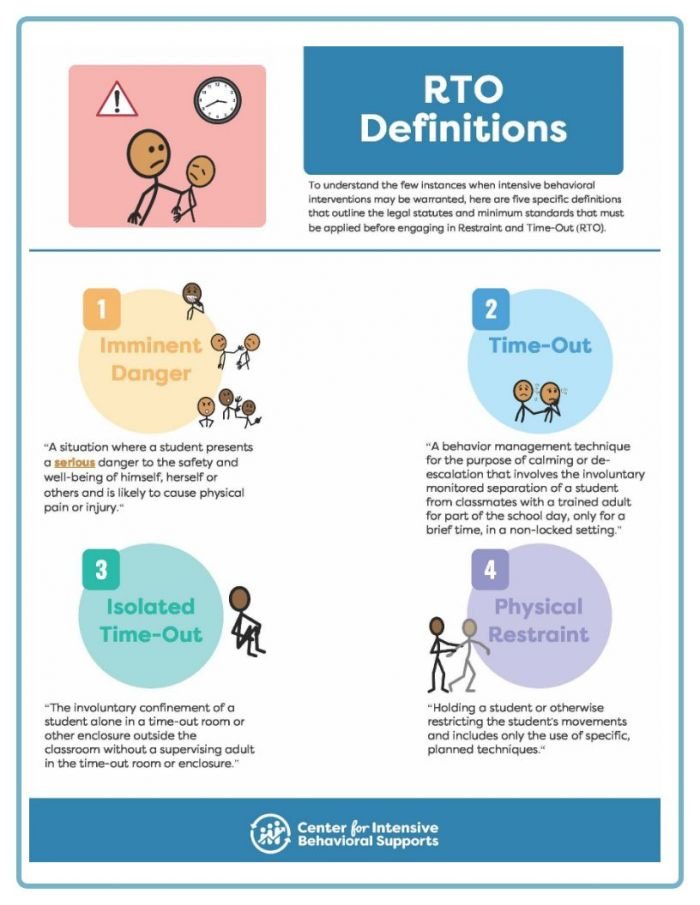
To understand the few instances when intensive behavioral interventions may be warranted, here are five specific definitions that outline the legal statutes and minimum standards that must be applied before engaging in Restraint and Time-Out (RTO)
RTO Definition PDF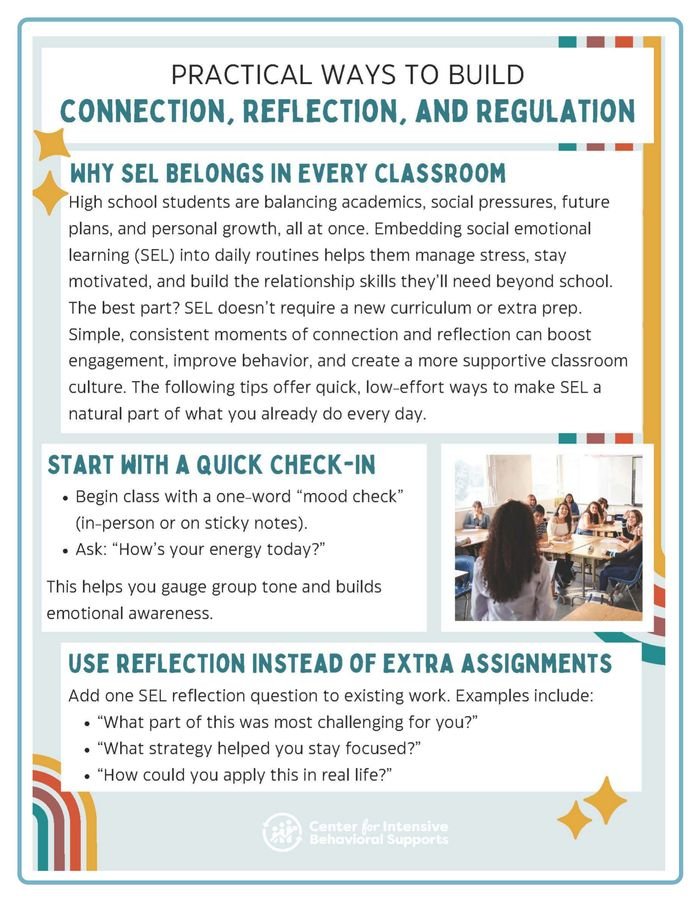
This resource offers simple, low-effort ways for high school teachers to integrate social emotional learning into daily classroom routines. You don't need a new curriculum, just small, intentional habits woven into what you already do. SEL thrives when it feels natural, not added on.
Practical Ways to Build Connection, Reflection, and Regulation PDF
Preventative Strategies to Support Student Behavior is a practical tool that provides educators with
proactive approaches to help students feel safe, regulated, and ready to learn. The strategies focus on routines, transitions, classroom supports, and emotional regulation to reduce challenging behavior before it escalates.
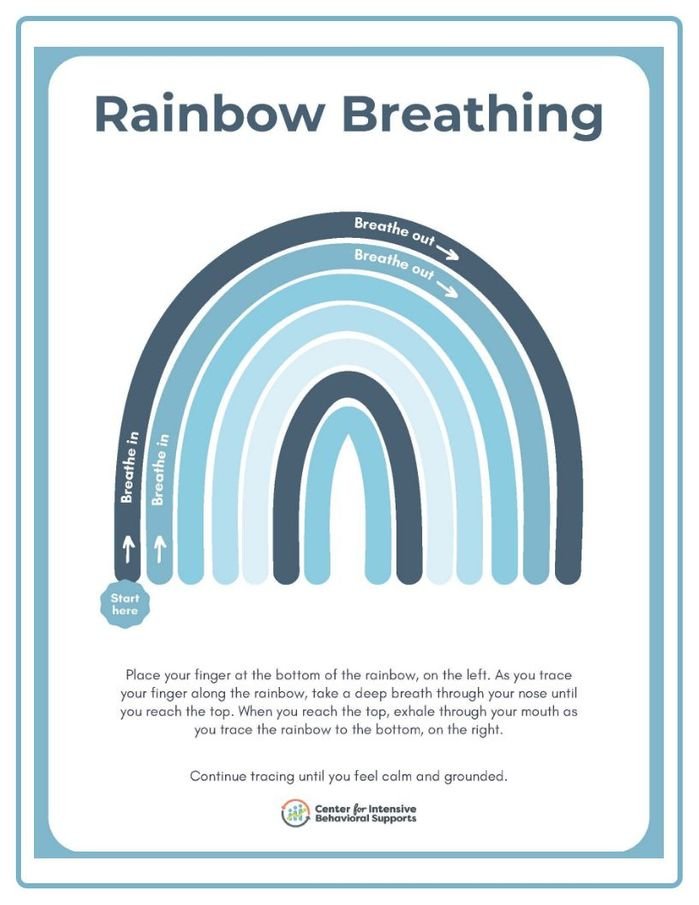
Rainbow Breathing is a calming technique that helps students focus on their breath, redirecting attention away from sources of stress. Use this strategy to help students self-regulate when they feel stressed, anxious, or upset.
Rainbow Breathing PDF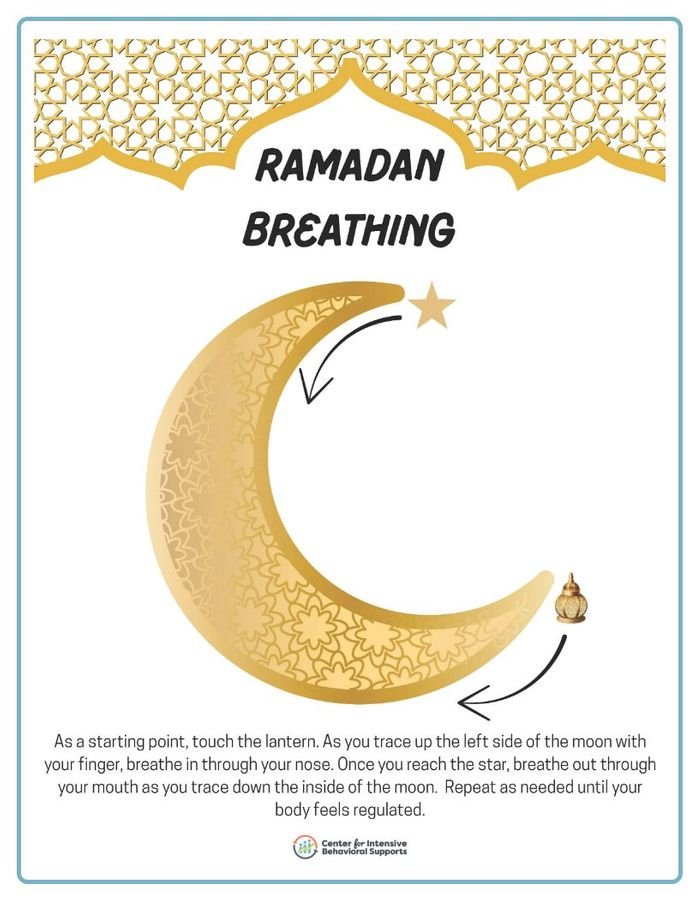
Ramadan Breathing is a calming activity where children trace the moon, focusing on breathing and repeating as needed for regulation.
Ramadan Breathing PDF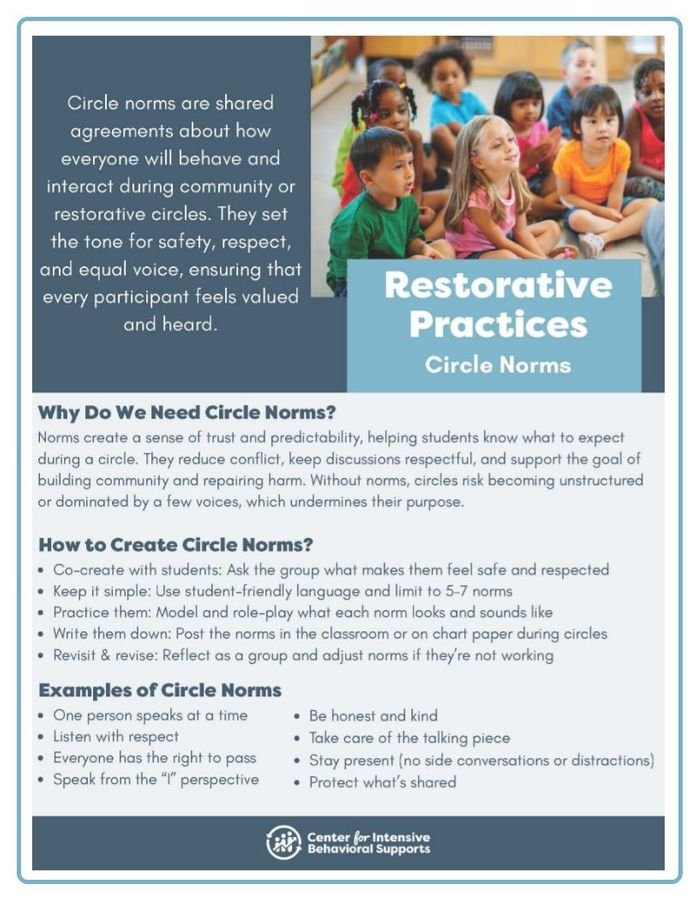
Circle norms are agreements created by the group to guide respectful participation in community and restorative circles. They help ensure safety, fairness, and equal opportunity for every voice to be heard.
Restorative Practices-Circle Norms PDF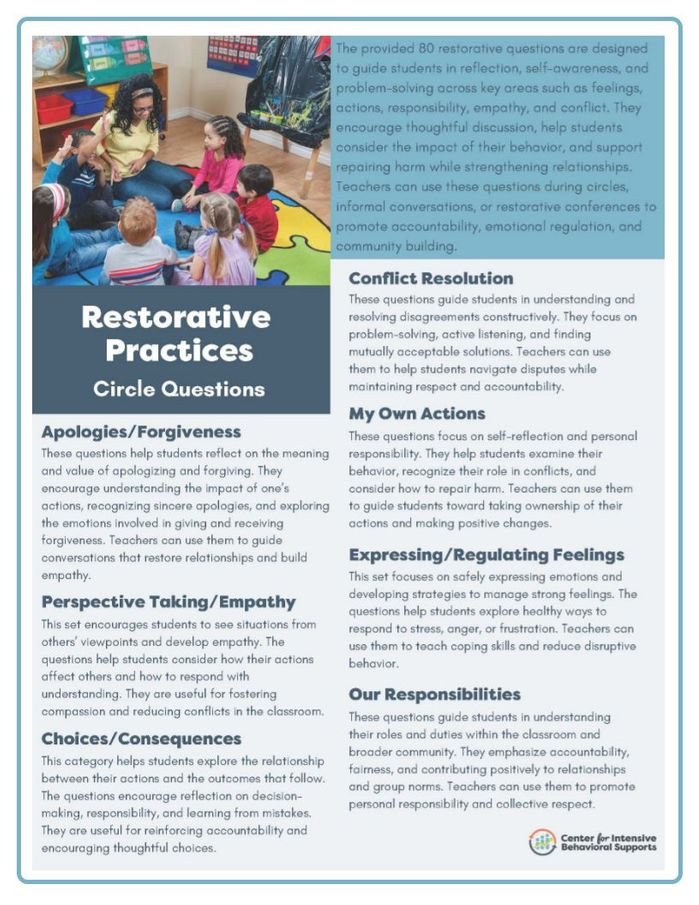
This resource provides a comprehensive collection of restorative questions and circle prompts. It supports building empathy, accountability, and problem-solving while fostering a safe, respectful, and connected classroom community.
Restorative Practice - Circle Questions PDF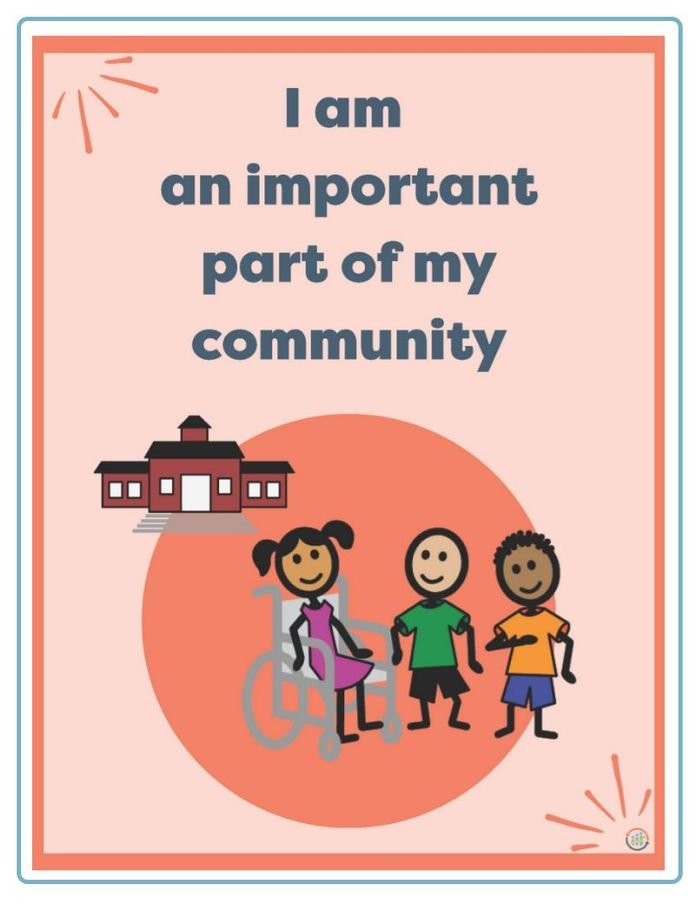
These posters provide simple, kid-friendly affirmations that help students understand accountability,
relationships, and the importance of making things right when harm occurs. Each statement encourages positive choices and reminds students they are valued members of their community.
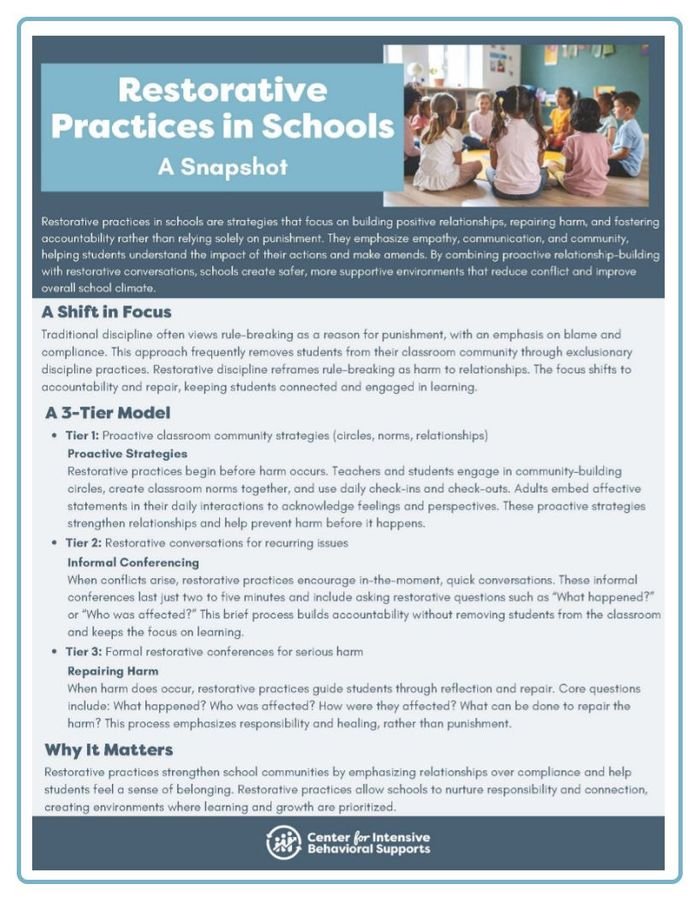
This resource introduces restorative practices as a relationship-centered approach that builds community, repairs harm, and supports student growth. It highlights strategies teachers can use proactively and reactively to foster accountability, empathy, and healing in the classroom.
Restorative Practice - Snapshot PDF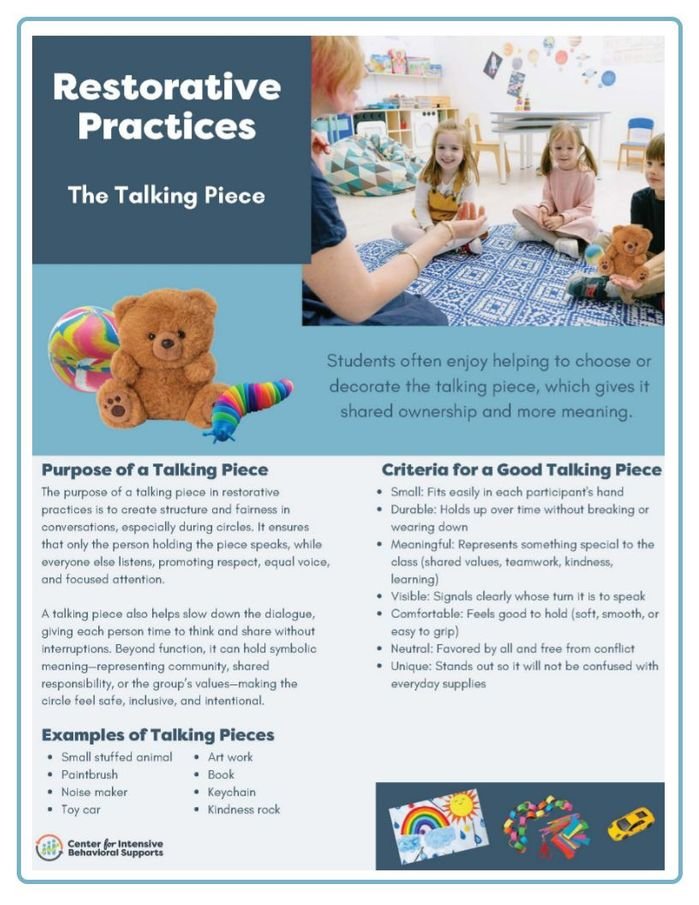
This handout explains the purpose, criteria, and examples of talking pieces used in restorative practices. It highlights how talking pieces promote fairness, respectful listening, and meaningful participation during classroom circles.
Restorative Practices - The Talking Piece PDF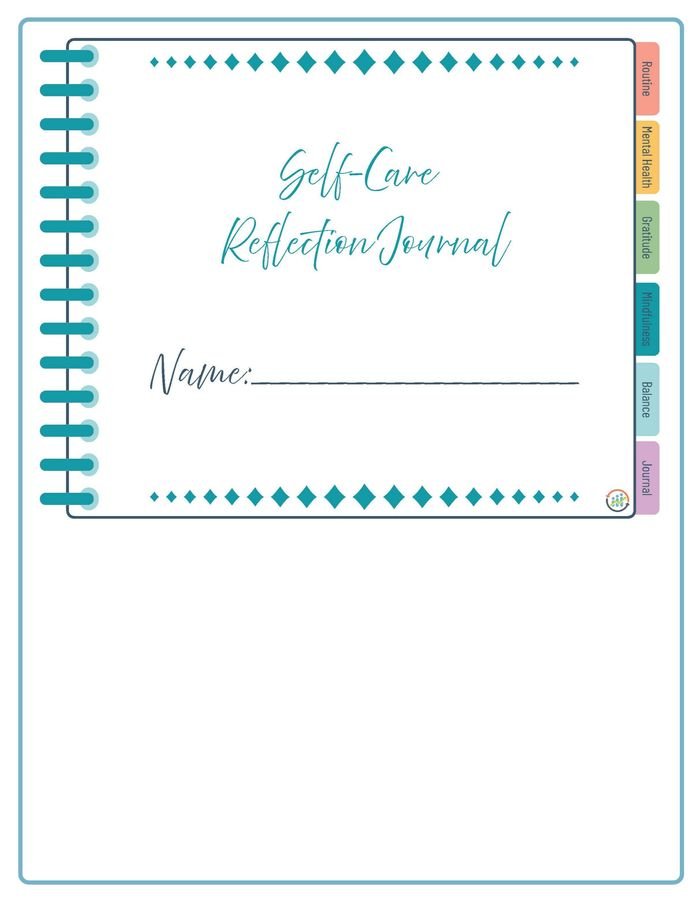
This journal guides teens through simple, meaningful self-care practices such as mindfulness, routine-building, gratitude, and emotional awareness. Each page helps students slow down, reflect, and build habits that support their overall well-being.
Self-Care Reflection Journal PDF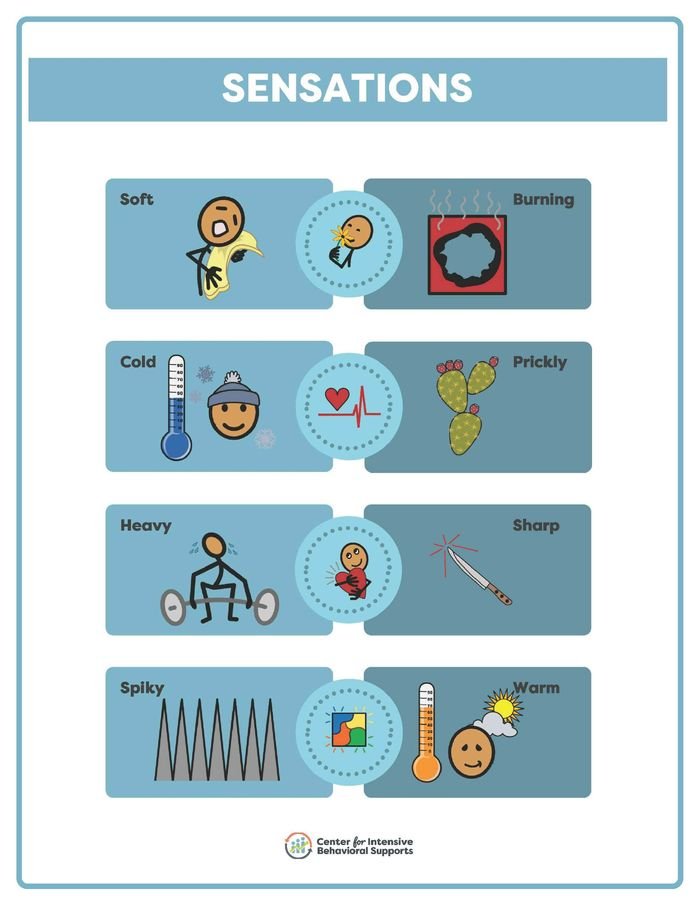
The Sensation poster is a visual for helping students grow their sensation vocabulary list.
Sensations PDF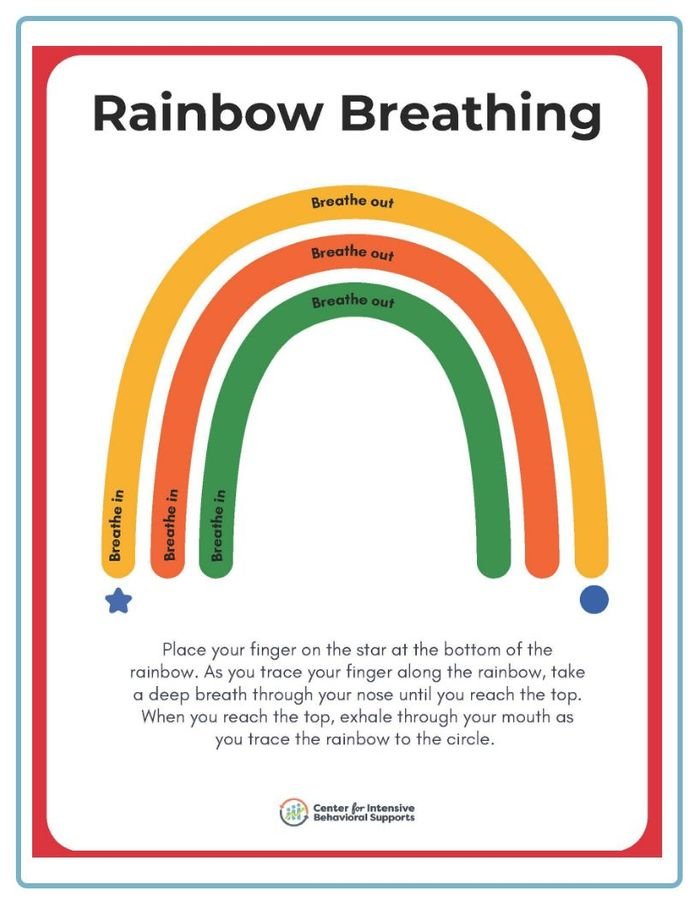
Shape Breathing is a set of calming techniques that help students focus on their breath, redirecting attention away from sources of stress.
Shape Breathing PDF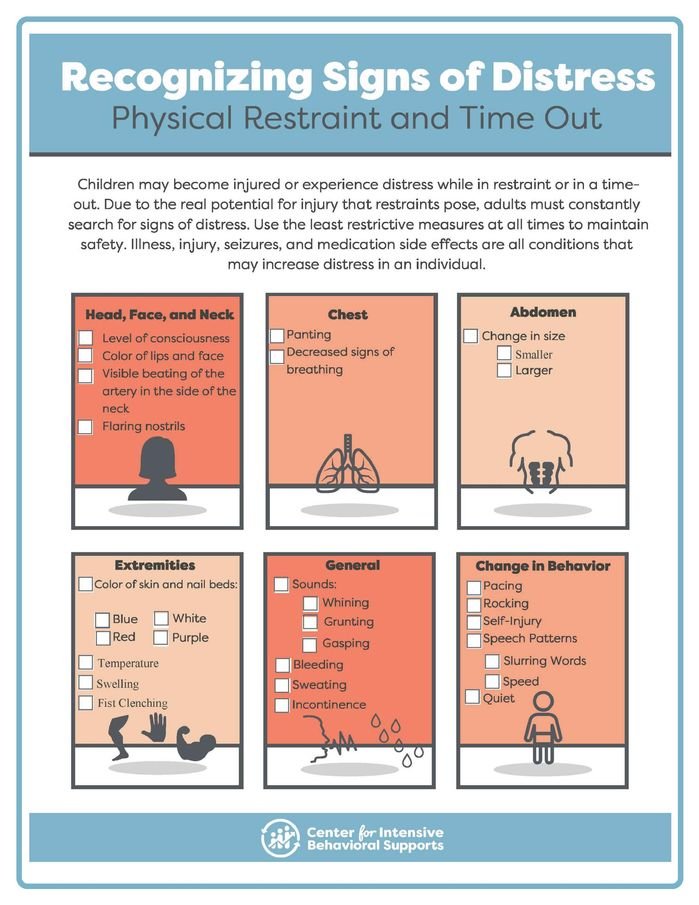
The Signs of Distress handout provides school staff with examples of physical signs that may indicate a student is in distress.
Signs of Distress PDF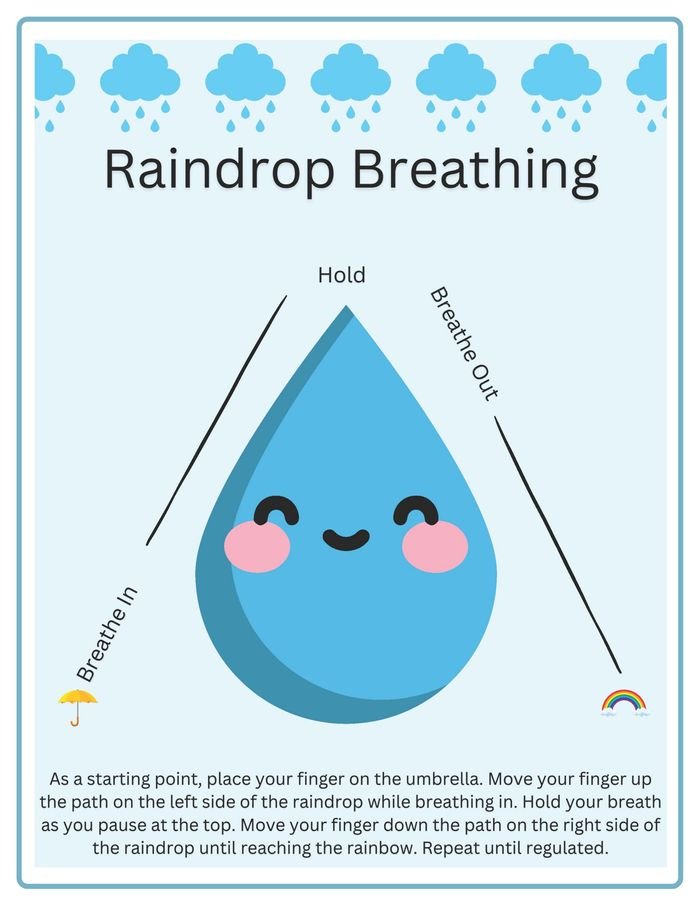
Use these strategies to encourage students to self-regulate when they feel stressed, anxious, or upset.
Practicing these techniques while in a regulated state will help students feel confident when they need to use any regulating strategy on their own.
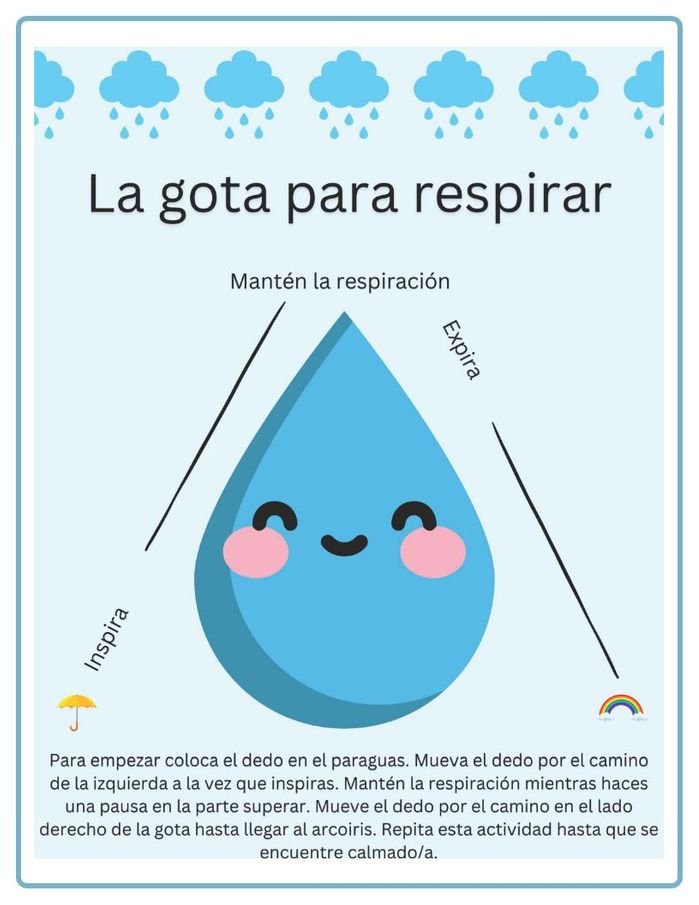
Usa estas estrategias para animar a los estudiantes a autorregularse cuando se sienten estresados, ansiosos o molestos. Practicar estas técnicas con los estudiantes cuando están calmados ayudará a los estudiantes a sentirse más seguros cuando tengan que usarlas por su cuenta.
Respirar con la primavera PDF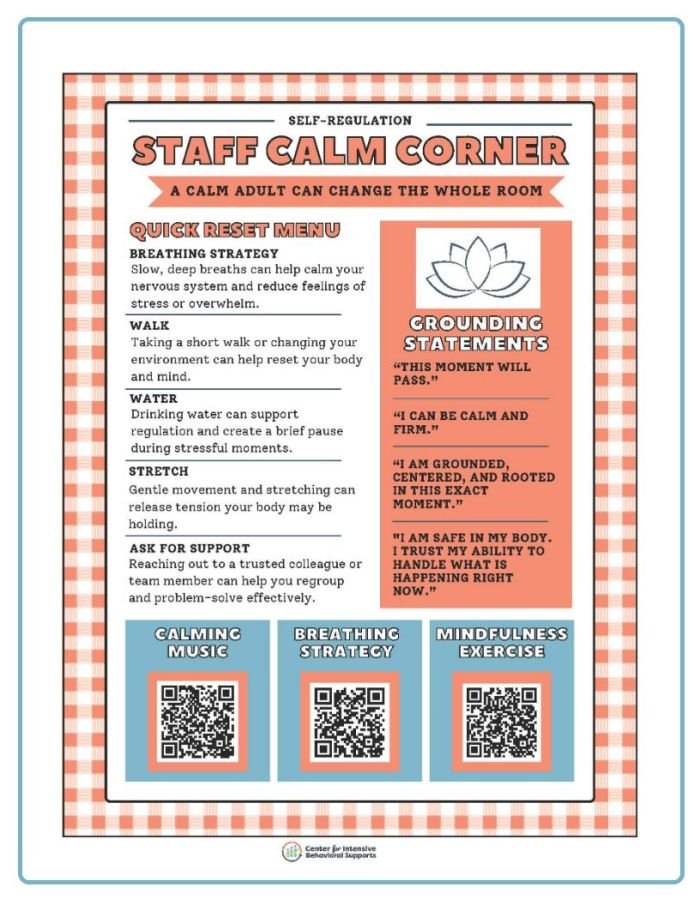
The Staff Calm Corner resource is designed to provide educators with quick, practical strategies to
support regulation during stressful or overwhelming moments throughout the school day and to create intentional opportunities for adults to pause, reset, and regulate.
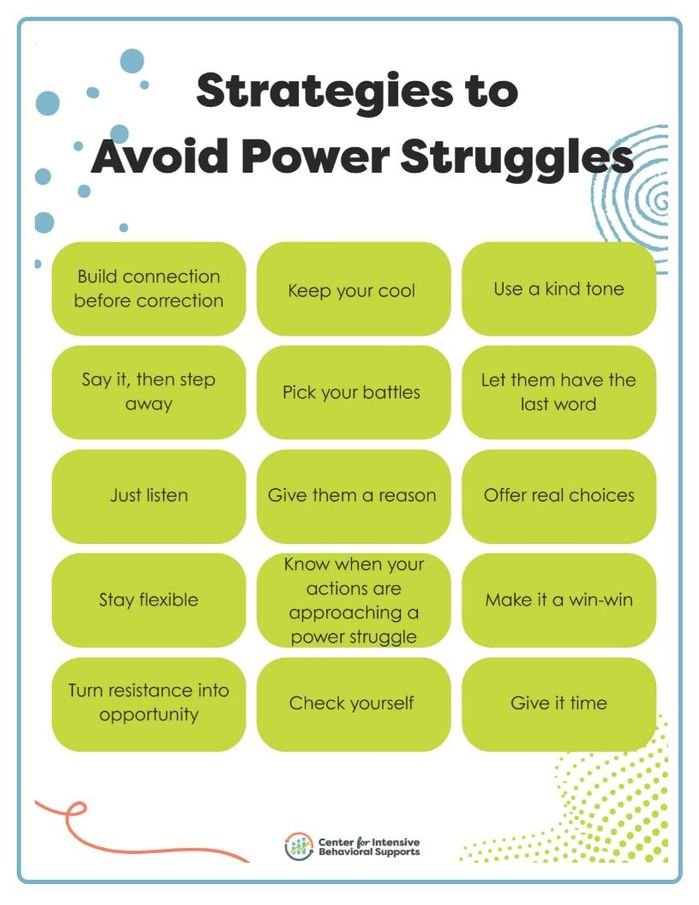
These 15 strategies offer practical, relationship-centered ways to prevent power struggles before they start. By staying flexible, listening actively, and offering choice, educators can create a calmer, more respectful classroom climate.
Strategies to Avoid Power Struggles PDF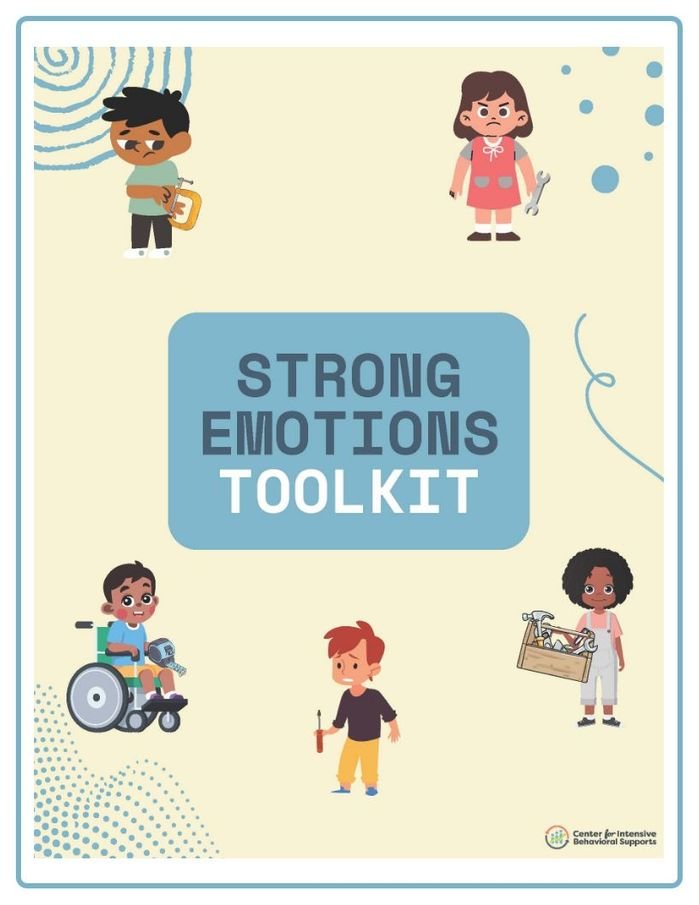
Self-regulation is a skill children can learn with practice and support. These Self-Regulation Tools use
familiar, hands-on metaphors to help children recognize big feelings and choose safe, calming actions.
This regulation strategy involves a sequence of physical movements paired with controlled breathing to help calm the body and mind. Focusing on the superhero imagery and mindful breathing promotes relaxation and stress relief.
Superhero Breathing PDF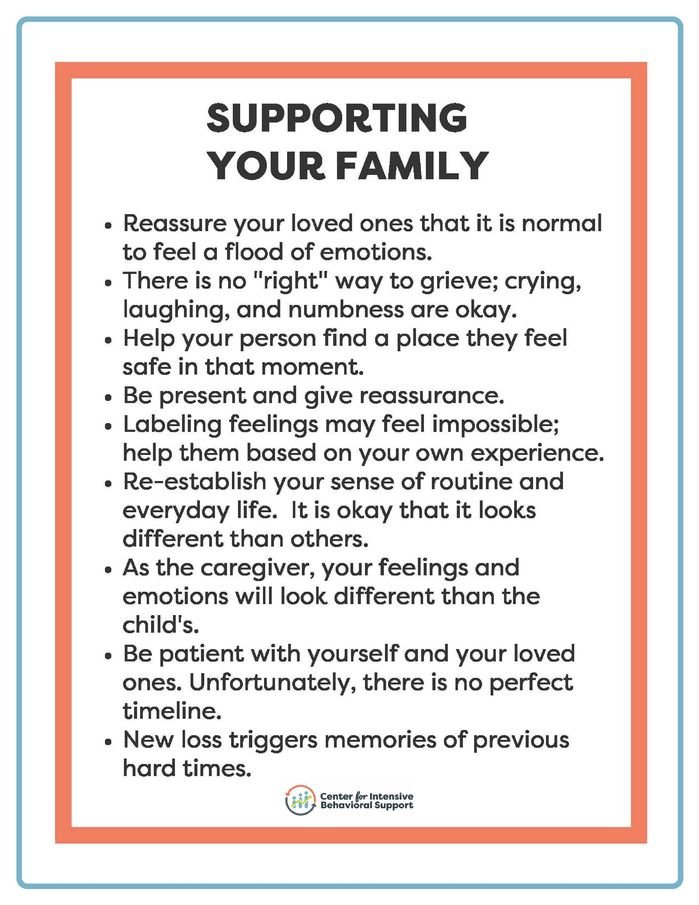
Supporting Your Family is specifically written to help know what to do when a family has a child
experiencing trauma and grief.
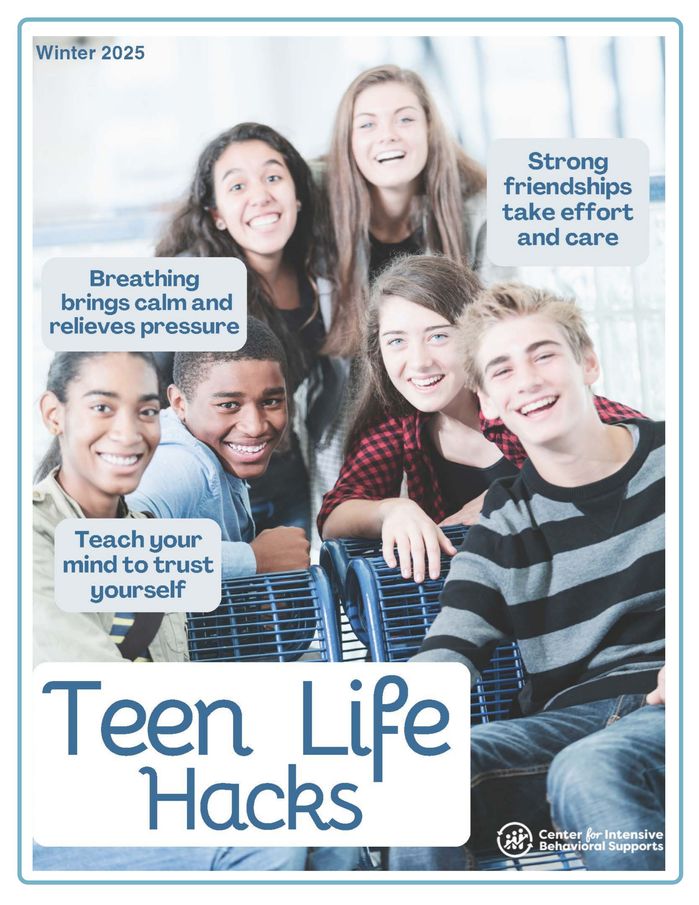
Regulation skills like working towards a goal, coping with change, or recognizing your feelings, help you manage your emotions, reactions, and behaviors in a healthy way, even in difficult situations. Developing these skills is especially important as you navigate new challenges as you continue to grow and mature.
Teen Life Hacks - Winter 2025 PDF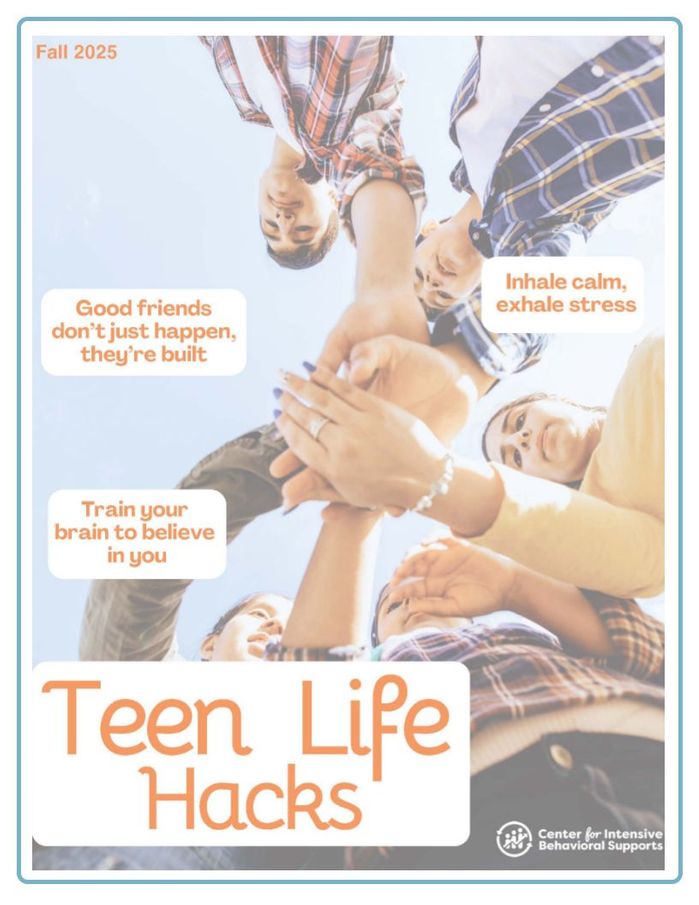
Regulation skills like working towards a goal, coping with change, or recognizing your feelings, help you manage your emotions, reactions, and behaviors in a healthy way, even in difficult situations. Developing these skills is especially important as you navigate new challenges as you continue to grow and mature.
Teen Life Hacks - Fall 2025 PDF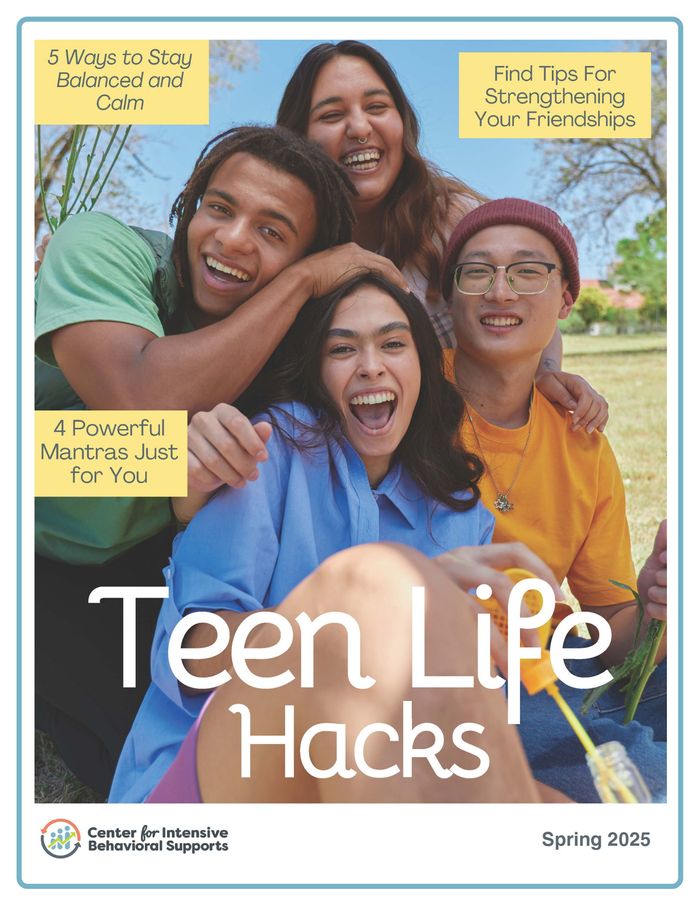
This document has six apps that teens can download that will help with coping and emotional regulation.
Teen Life Hack - Spring 2025 PDF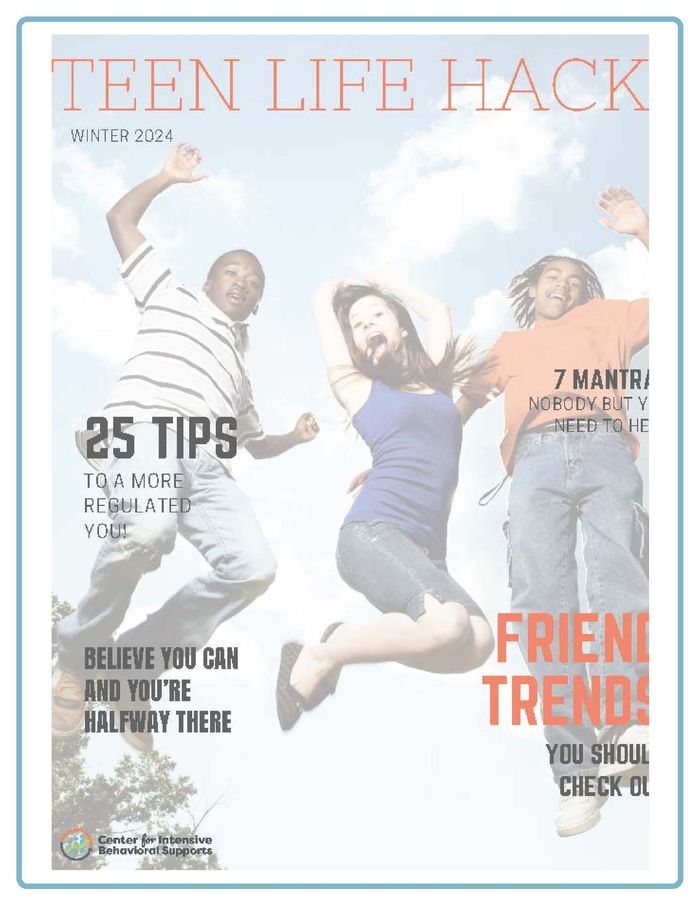
Regulation skills like working towards a goal, coping with change, or recognizing your feelings, help you manage your emotions, reactions, and behaviors in a healthy way, even in difficult situations. Developing these skills is especially important as you navigate new challenges as you continue to grow and mature.
Teen Life Hacks PDF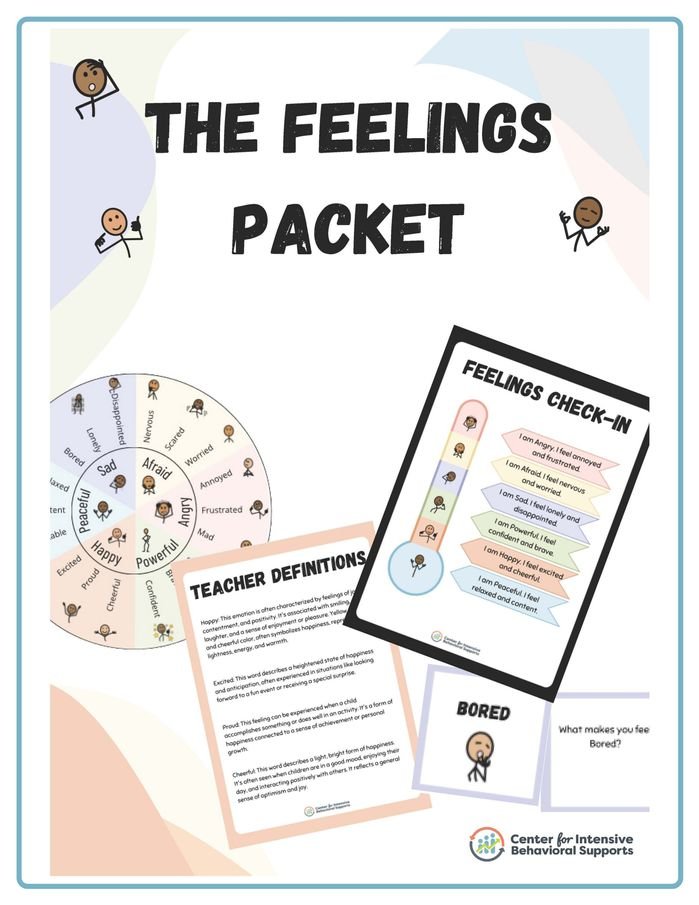
The Feelings Packet is a set of resources for students functioning at the 3-9 year old range. Included are a feelings compass, feelings scale, student dictionary, teacher definitions, drawing prompts, writing prompts, and cards differentiated at three different levels. Use this packet to help build an emotional vocabulary with your students.
The Feelings Packet PDF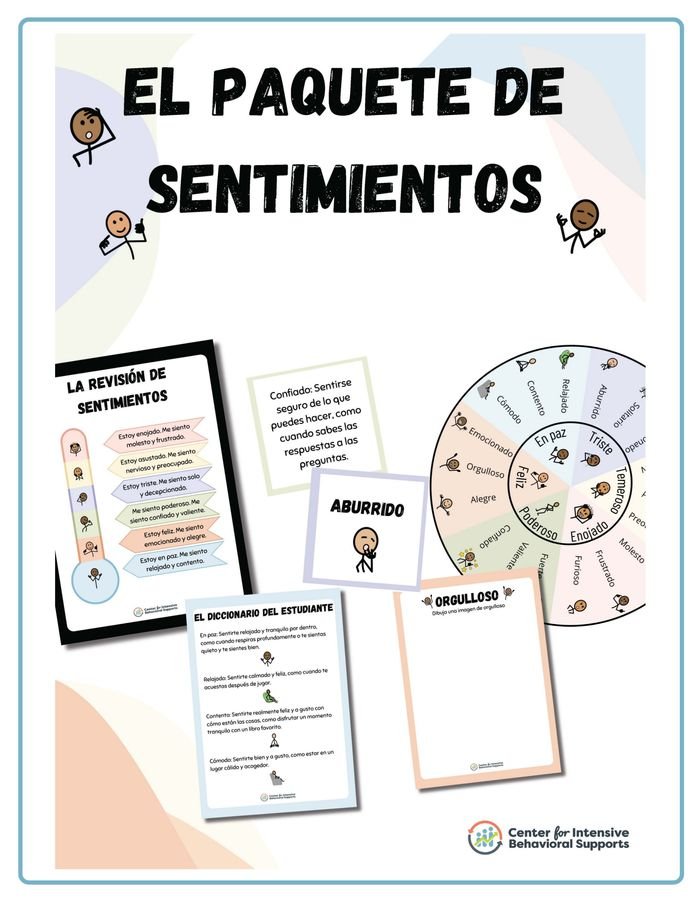
El Paquete de Sentimientos es un conjunto de recursos para estudiantes que funcionan en el rango de 3 a 9 años. Incluye una brújula de sentimientos, una escala de sentimientos, un diccionario para estudiantes, definiciones para maestros, indicaciones para dibujar, indicaciones para escribir y tarjetas diferenciadas en tres niveles diferentes. Use este paquete para ayudar a desarrollar un vocabulario emocional con sus studiantes.
El Paquete De Sentimientos PDF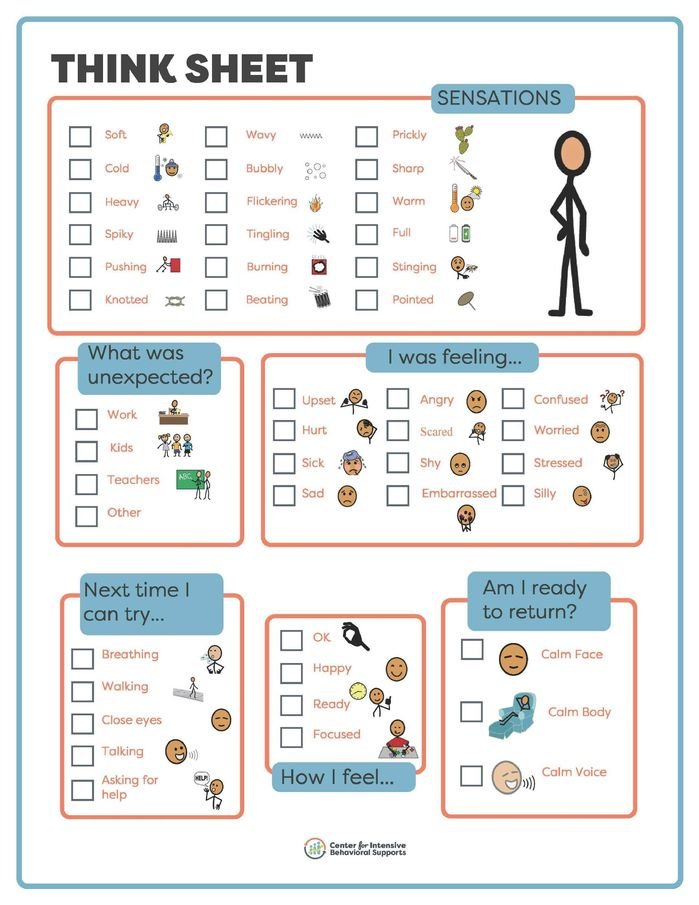
Thinks Sheets are reflective activities designed to help students focus on their body sensations that occurred during a time of dysregulation. The activity helps a student to identify sensations and feelings they may have experienced and helps to identify strategies for self-regulation when experiencing similar sensations in the future.
Think Sheet PDF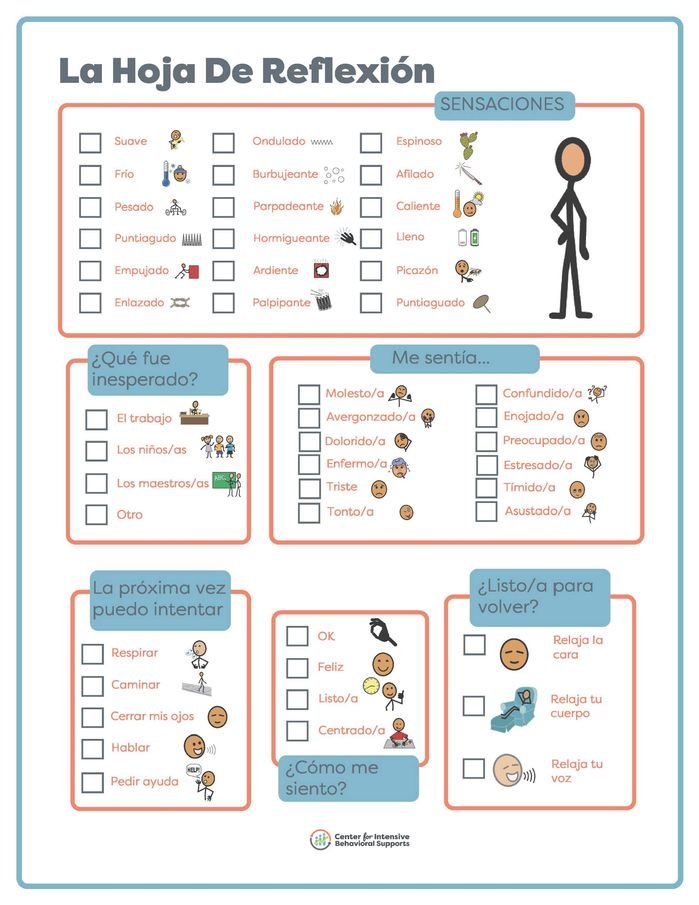
La Hoja De Reflexión ofrece varias actividades diseñadas para que los estudiantes se centren en las
emociones corporales que fueron alteradas durante un período
agitado. Estas actividades ayudan a los estudiantes a identificar las sensaciones y sentimientos que pueden haber experimentado, y también, ayudan a identificar estrategias para autorregularse por si experimentan sensaciones similares
en el futuro.
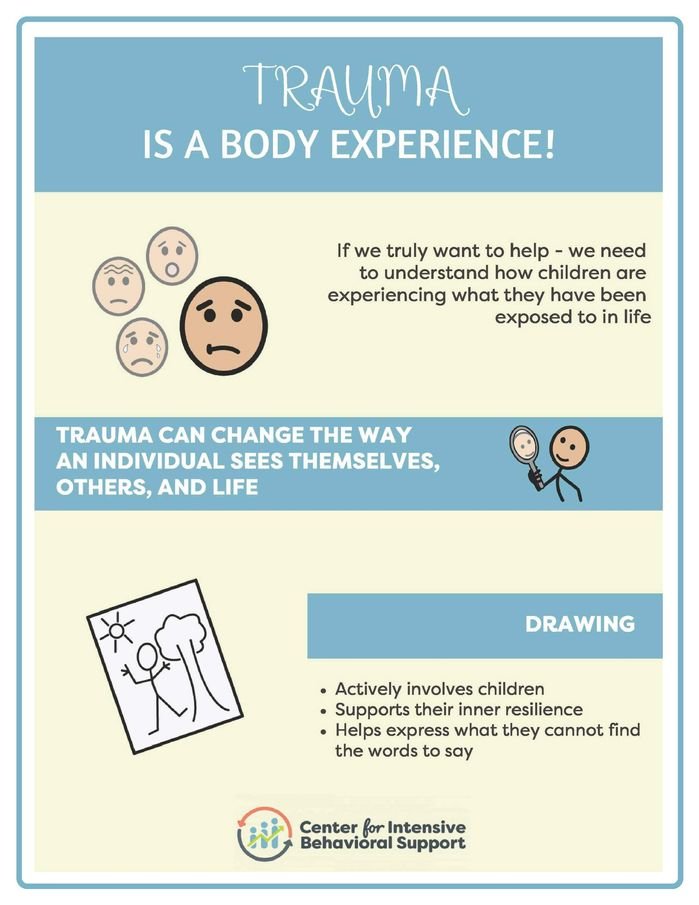
This resource outlines strategies to support a child who has experienced trauma.
Trauma is a Body Experience PDF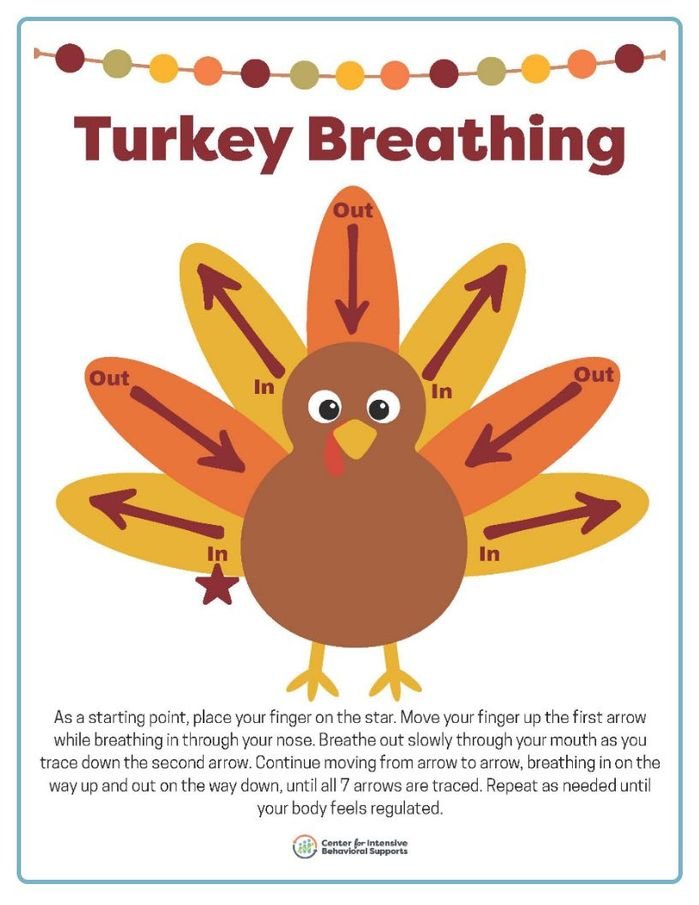
Turkey Breathing is a calming activity where children trace up and down the arrows on each of the turkey's seven feathers, breathing in up one side and out down the other to relax and refocus.
Turkey Breathing PDF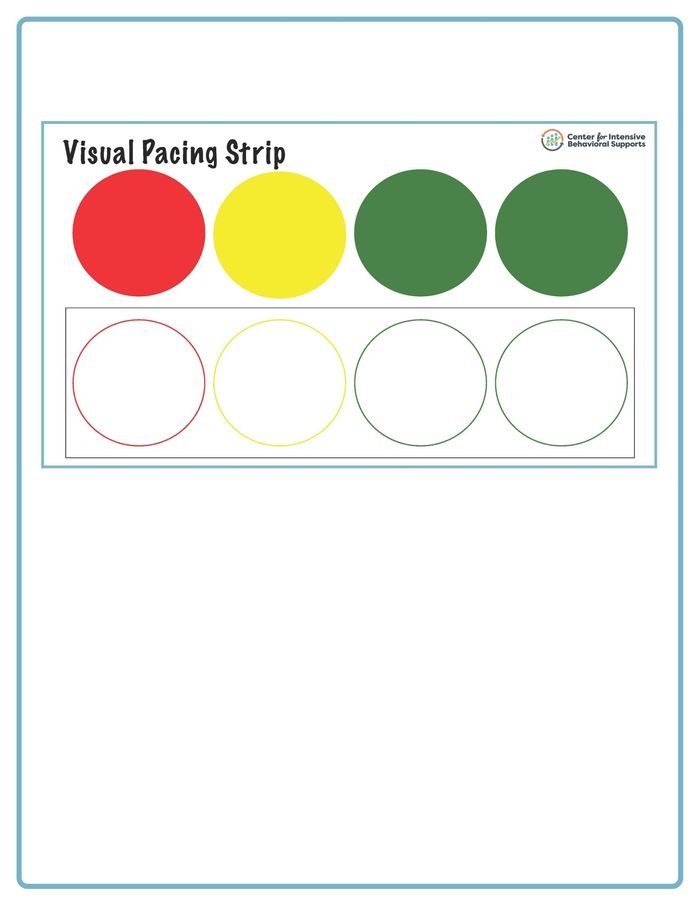
Visual Pacing Strips are flexible tools that allow adults to control the visual progression of time-based on student response or age and vary accordingly. They are effective for class-wide application and as a layer of additional support for individual students.
Visual Pacing Strip PDF
These voice-level posters help students understand how loud or quiet their voices should be indifferent situations. Each level describes when to use a silent, whisper, partner, presentation, or outside voice.
Voice Levels PDF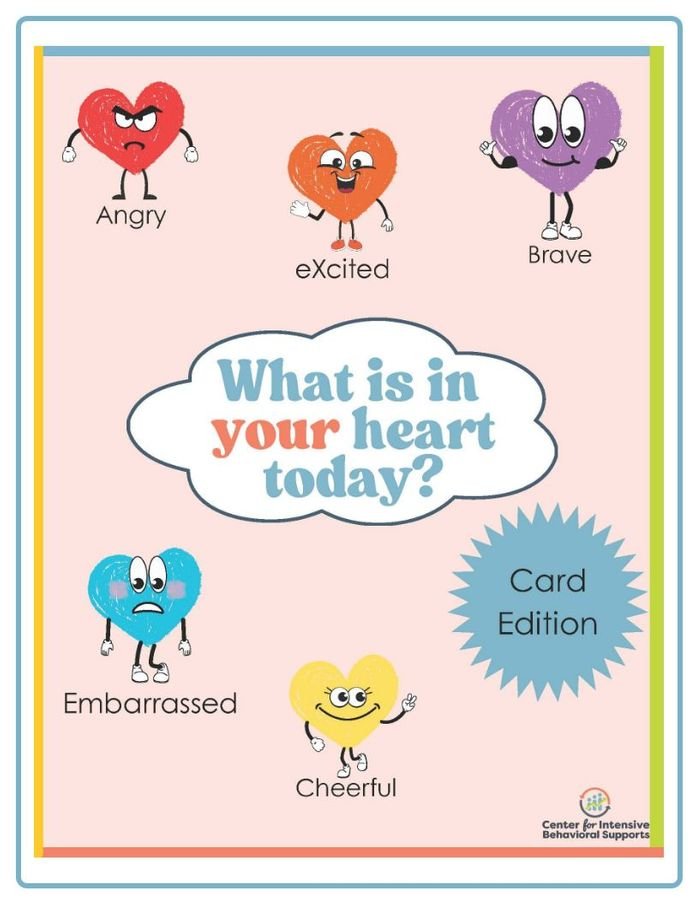
These fun and expressive heart-shaped emotion flash cards help students learn and talk about their feelings in a playful and relatable way. Each card features a different feelings word with a heart character that reflects the identified emotion.
What Is In Your Heart Today? Cards PDF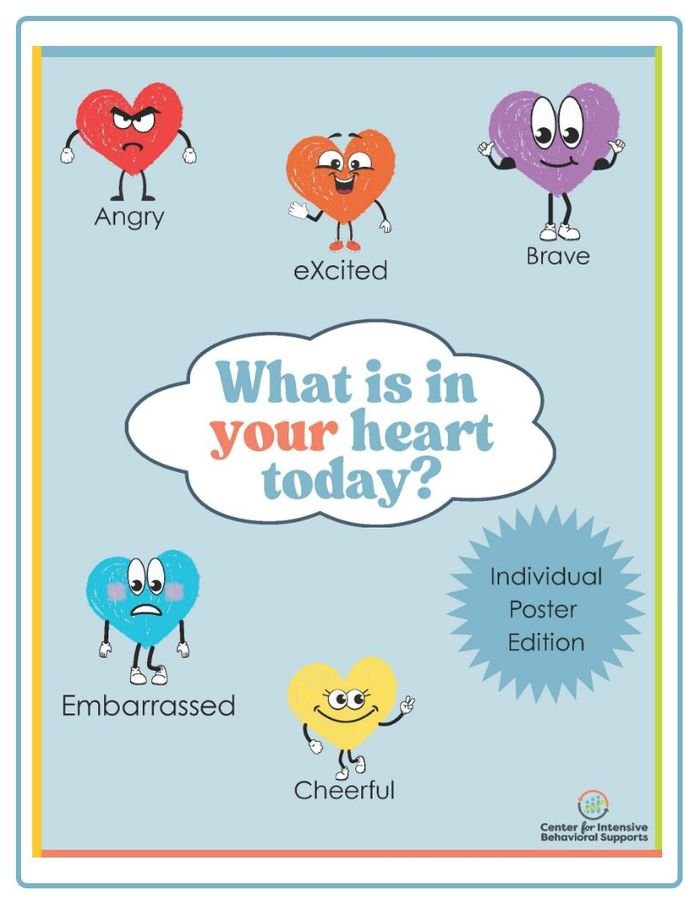
These full-page emotion posters each feature one feeling word with a fun heart character, giving students a visual and engaging way to connect with emotions. The last poster includes space for students to draw their own picture to invent their own feeling heart character.
What Is In Your Heart Today? Full Page Poster PDF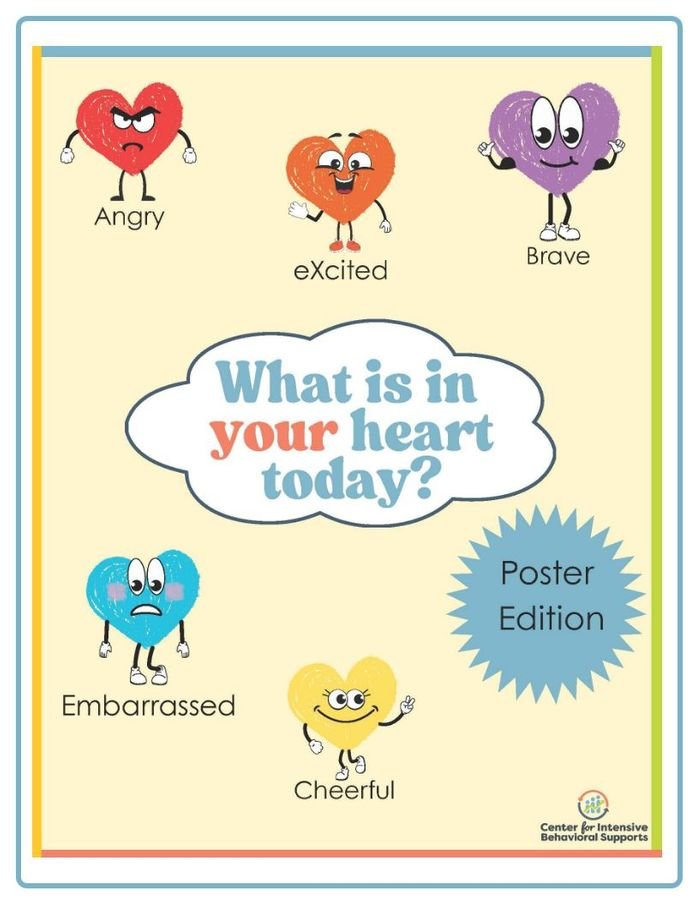
This cheerful and colorful poster helps students identify and name their feelings using heart characters. It's a fun, visual way to build emotional awareness and create daily check-in moments with your class.
What Is In Your Heart Today? Poster PDF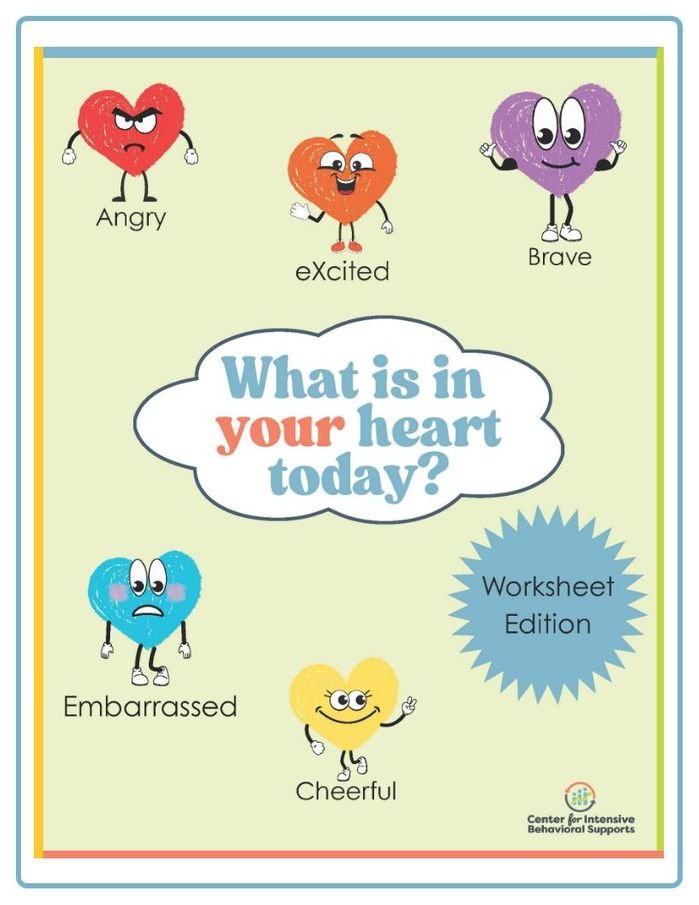
These heart-themed worksheets invite students to explore their emotions by drawing a picture that matches each feeling word. It’s a creative and reflective way for students to connect with their feelings and begin to understand the different ways emotions can show up in their lives.
What Is In Your Heart Today? Worksheets PDF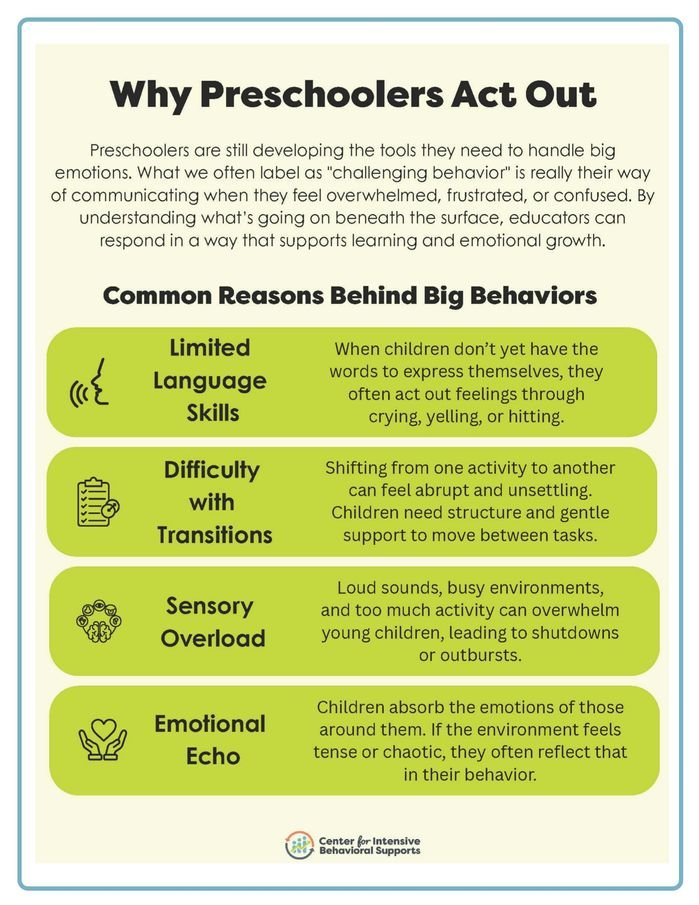
This guide is designed to help early childhood educators better understand the “why” behind preschool behavior and provide practical, nurturing strategies to support emotional regulation. It offers a blend of developmental insight and hands-on techniques for calming, connecting, and guiding children through big feelings.
Why Preschoolers Act Out PDF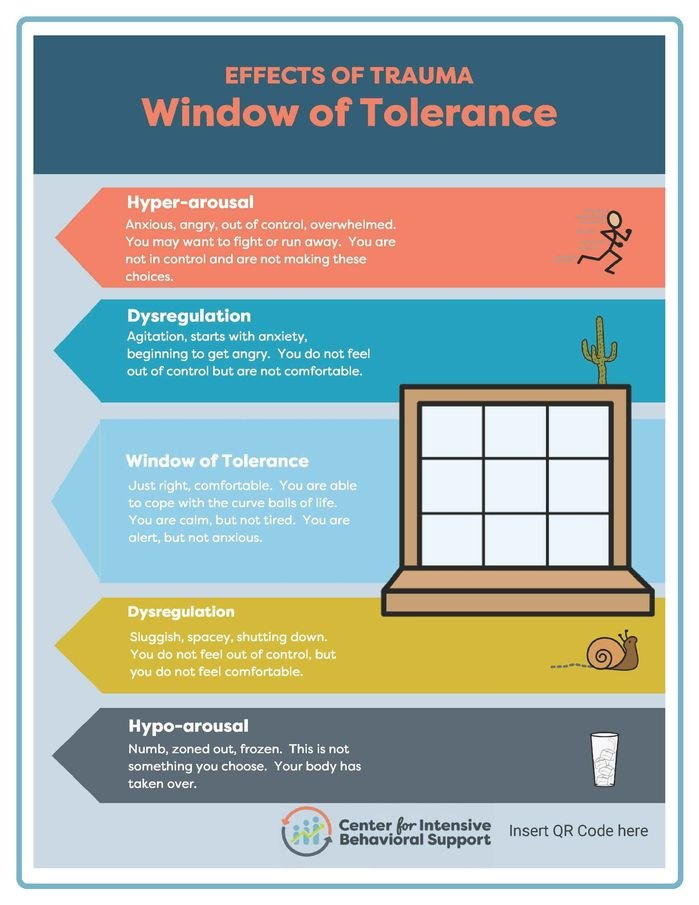
The Window of Tolerance visual will remind educators how a student that has experienced trauma may have less tolerance than a student who has not experienced trauma.
Window of Tolerance PDF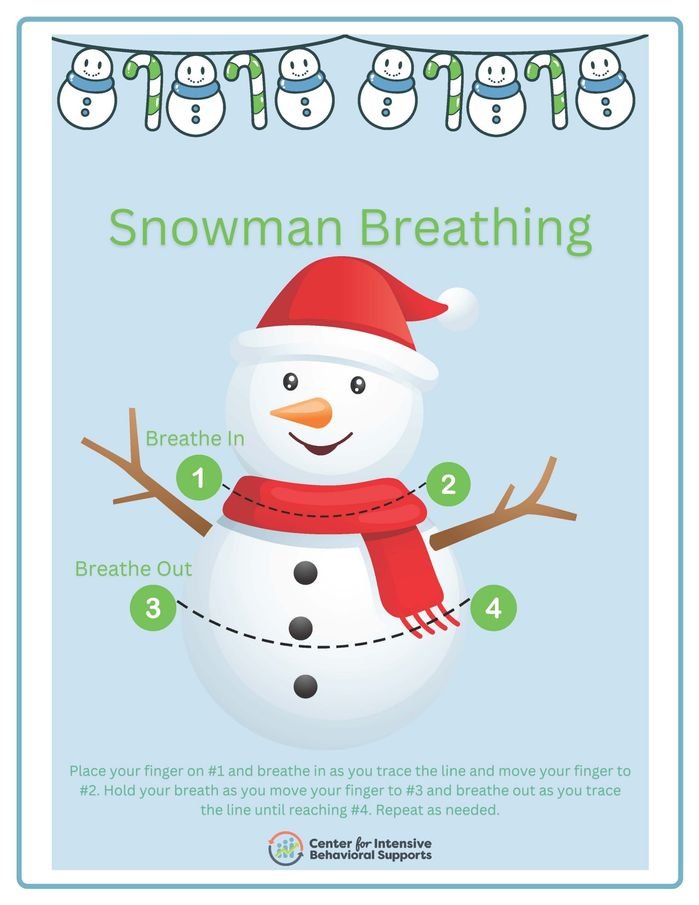
Use these strategies to encourage students to self-regulate when they feel stressed, anxious, or upset.
Practicing these techniques while in a regulated state will help students feel confident when they need to use any regulating strategy on their own.